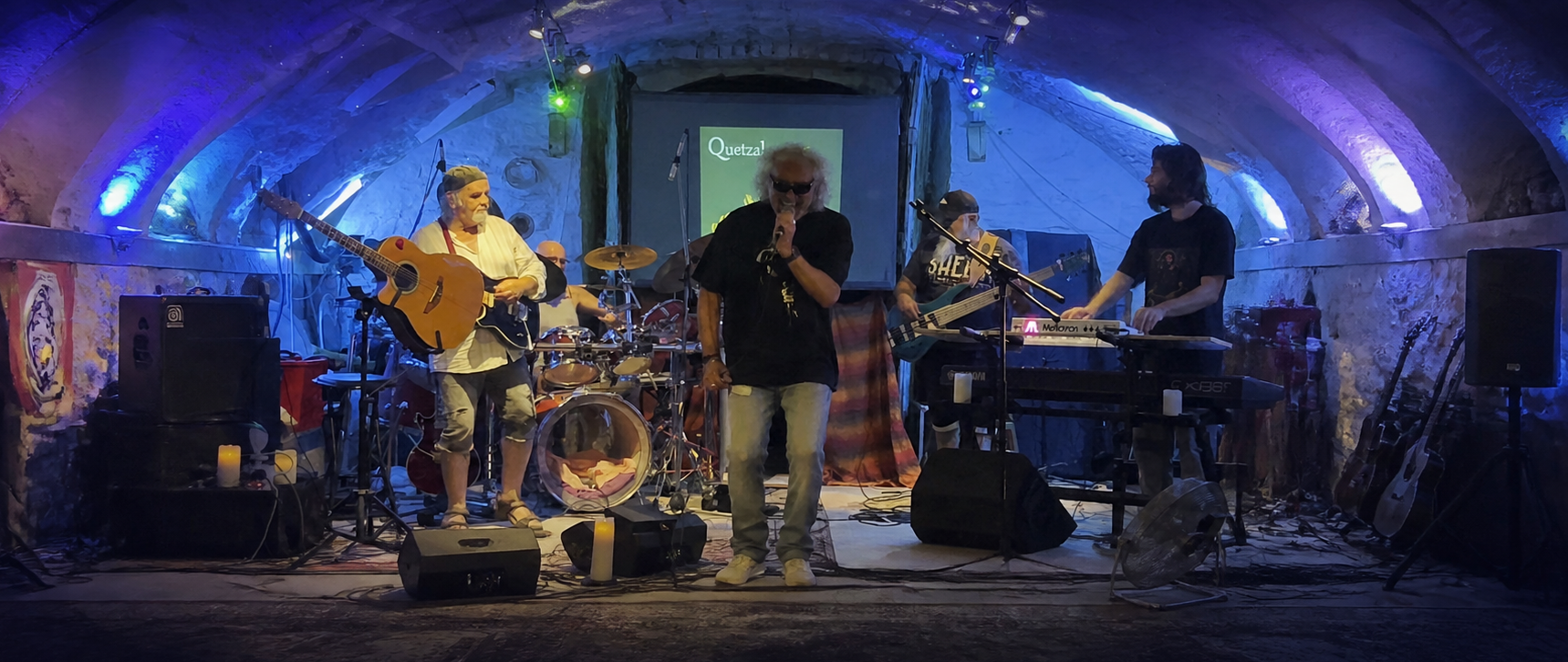

Quetzal progressive rock band live

Progressive rock instruments Mellotron, Moog, Hammond, guitar, bass, drums, flute, violin and synthesizers

The prog sound

An orchestra
inside rock.

Progressive rock transforms the classic rock line-up into an expansive sonic palette, combining electric instruments, orchestral keyboards, acoustic colours and electronic textures.

Guitar, bass, drums, keyboards and vocals form the core of the genre. But it is the inclusion of instruments such as the Mellotron in progressive rock, Moog, Hammond organ, flute, violin and saxophone that gives progressive rock its unmistakable depth.

This guide explores the instrumental families that create the harmonic richness, rhythmic complexity and immersive storytelling of prog, from the classic era to contemporary progressive music.

5+ Core families
Sonic colours
1970s Classic foundations
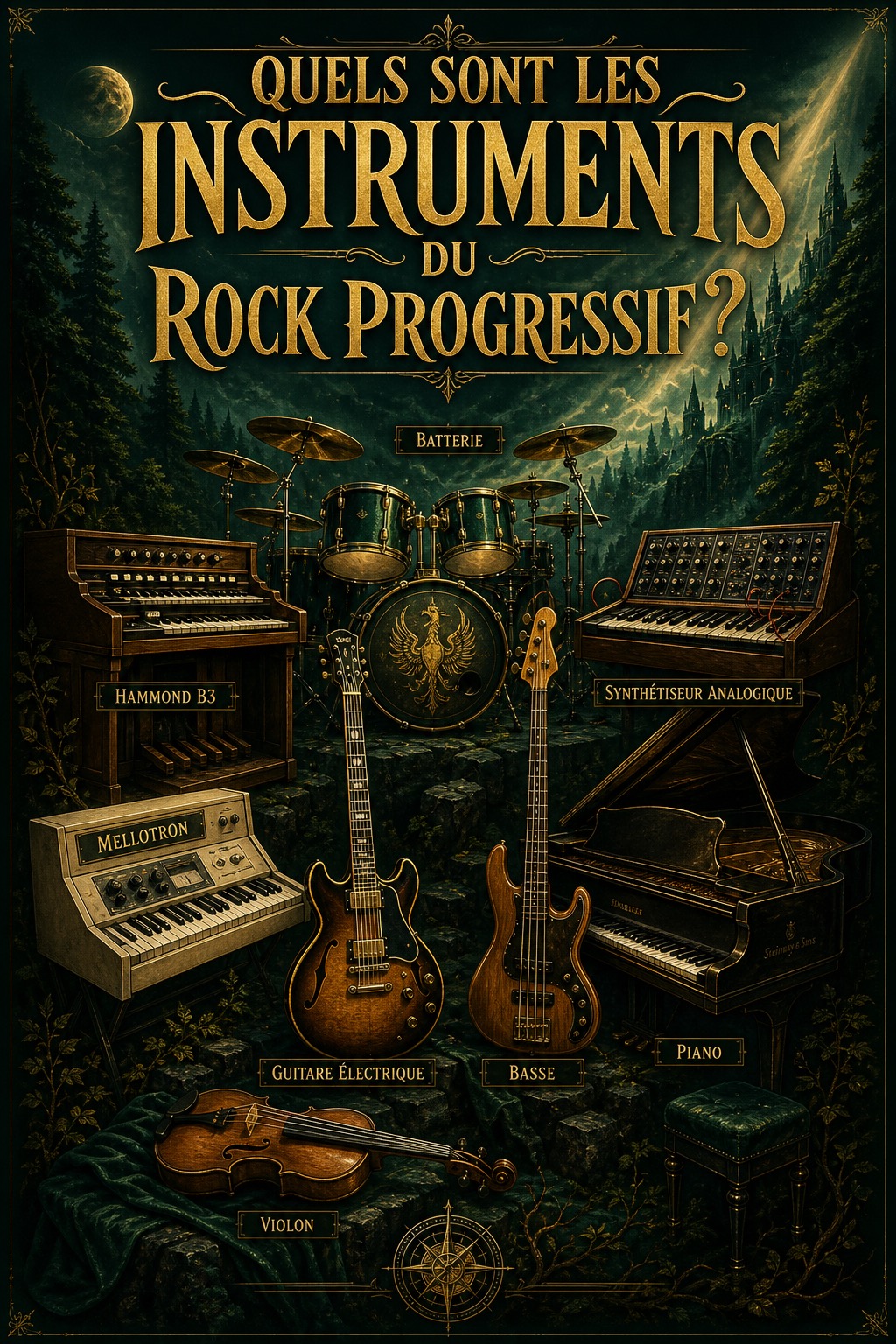
Main progressive rock instruments including keyboards, guitar, bass, drums, piano and violin
A visual overview of the keyboards, strings, drums and orchestral colours associated with progressive rock.

Mellotron Tape, orchestra and atmosphere

The emblem

The sound of an imagined orchestra.

The Mellotron is often considered the emblematic instrument of progressive rock. Its tape-based strings, choirs and flute sounds allowed musicians to bring orchestral depth into the rock format.

Alongside the Mellotron, the Moog and Hammond organ became essential voices in the genre, expanding arrangements from powerful analog leads to rich harmonic layers.

Explore the Mellotron in Progressive Rock

Musical architecture

Five families.
One evolving language.

Progressive rock combines acoustic, electric and electronic instruments. Their interaction enables contrasts, polyrhythms, orchestral colour and musical narratives that extend beyond conventional rock songwriting.

01

Keyboards

Mellotron, Hammond organ, piano, electric piano, Moog and synthesizers create the harmonic and orchestral dimension of prog.

02

Strings

Electric guitar, bass, acoustic guitar, violin and Chapman Stick develop themes, counterpoints, textures and melodic movement.

03

Percussion

Drums and additional percussion create asymmetrical time signatures, polyrhythms, dynamics and transitions.

04

Winds

Flute, saxophone, clarinet and oboe introduce folk, jazz, classical and experimental colours into the arrangements.

05

Voice & effects

Vocals, harmonies, delay, reverb, phaser and sound processing give progressive compositions their narrative and atmospheric depth.

A changing palette

How progressive rock instruments evolved.

Since the 1970s, progressive rock has continuously combined heritage and innovation. Analog instruments remain central, while digital production and modern tools extend the possibilities of contemporary prog.

1970s

Mellotron, Hammond organ, Moog, electric piano and flute define an orchestral, ambitious and exploratory era.

1980s

Digital synthesizers, new effects and more precise production expand the sonic language of progressive music.

1990s

The progressive revival reconnects with long compositions while integrating powerful keyboards and modern studio techniques.

Today

Vintage instruments, software synths, digital workstations, acoustic colours and effects coexist within contemporary prog.

Sound architecture

How each instrument shapes progressive rock.

Each instrumental voice contributes a distinct function: orchestral texture, harmonic structure, melodic development, rhythmic movement or experimental colour.

Instrument Musical function Characteristic sound Emblematic bands
Mellotron Create orchestral pads and enrich arrangements Symphonic textures, choirs and strings Genesis, King Crimson
Moog Play solos and reinforce instrumental passages Powerful and expressive analog sounds Yes, Emerson Lake & Palmer
Hammond organ Structure harmony and support developments Vintage, warm and powerful colour Yes, Deep Purple
Electric guitar Develop riffs, solos and melodic themes Atmospheric textures and sustain Pink Floyd, Genesis
Electric bass Link harmony and rhythm through melodic lines Fluid, precise and often virtuoso playing Yes, Rush
Drums Structure rhythmic changes and transitions Polyrhythms and complex time signatures King Crimson, Rush
Flute & violin Introduce melodies and orchestral contrasts Folk, classical and expressive textures Jethro Tull, King Crimson
Saxophone Bring jazz colour and improvised passages Expressive and experimental sonorities Van der Graaf Generator

Beyond the standard line-up

Atypical instruments.
Unlimited colours.

Progressive rock is never limited to keyboards, guitar, bass and drums. Flute, electric violin, saxophone, Chapman Stick, mandolin and unusual synthesizers open the door to folk, jazz, classical and experimental territories.

Discover atypical instruments

Questions and answers

FAQ: progressive rock instruments.

A concise guide to the instruments, textures and musical principles that define progressive rock.

What instruments are used in progressive rock?

Progressive rock uses keyboards, synthesizers, guitar, bass, drums and vocals, along with atypical instruments such as flute, violin, saxophone, Mellotron and Chapman Stick.

What is the most emblematic instrument of progressive rock?

The Mellotron is often considered one of the most representative instruments of progressive rock because its orchestral sounds helped define the classic prog aesthetic.

Why does progressive rock use so many different instruments?

Progressive rock seeks to expand the vocabulary of rock music by combining classical, jazz, folk and experimental influences. Diverse instruments allow richer textures and more ambitious compositional structures.

Which instruments most differentiate prog from classic rock?

Mellotron, synthesizers, Hammond organ, Moog, flute, violin, saxophone and Chapman Stick are among the instruments that most clearly distinguish progressive rock from classic rock.