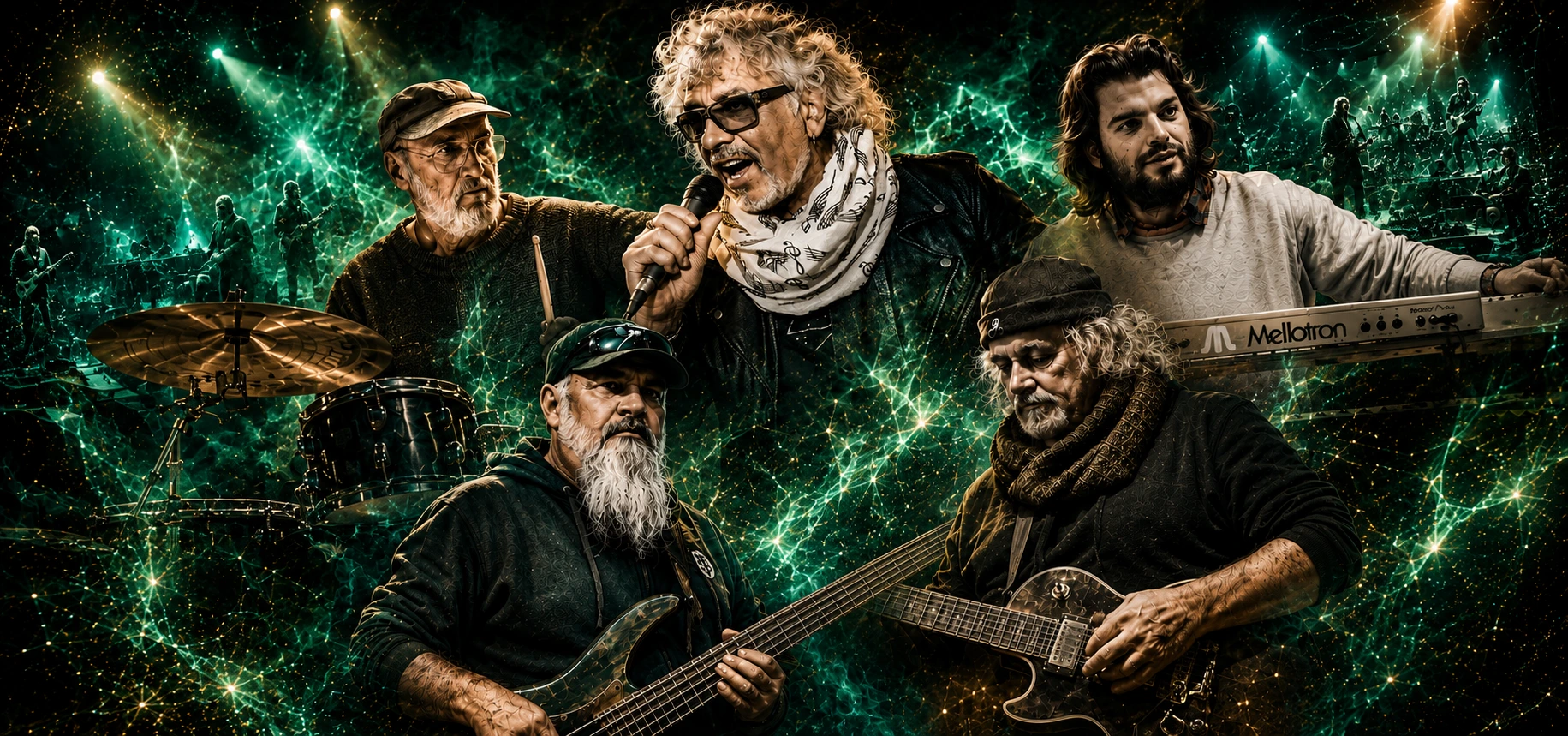

Quetzal live performance and progressive rock instrumentation

Atypical instruments in progressive rock Flute, violin, saxophone, Chapman Stick, theremin and experimental sound

Beyond the standard line-up

When rock
becomes a laboratory.

Progressive rock has always looked beyond the standard guitar, bass, drums and keyboards configuration. Its unusual instruments create new colours, new textures and new ways of telling musical stories.

Flute, violin, saxophone, Chapman Stick, theremin, vibraphone, mandolin and experimental electronic devices can transform a progressive composition into something closer to chamber music, jazz, folk, avant-garde or cinematic sound design.

These instruments expand the progressive rock instrument palette and work alongside the core voices of keyboards, guitar, bass, drums and vocals. Their integration into a coherent arrangement is a key element of progressive song structure and becomes a powerful tool when composing progressive rock.

7+ Unusual voices
Sonic colours
1 Expanded language

Beyond The familiar sound of rock

Expanded instrumentation

The sound of discovery.

Progressive rock uses unusual instruments because it seeks contrast, surprise and new sonic territory. A flute can introduce a folk-like melody, a violin can add tension and lyricism, while a saxophone can open the music toward jazz and improvisation.

These voices are not decorative extras. They can carry themes, alter the emotional balance of a section and give each album or composition a distinctive identity.

Explore all instruments

Unusual voices

Instruments
without borders.

Each atypical instrument brings its own history and vocabulary. Together, they allow progressive rock to connect with classical music, jazz, folk traditions, sound experimentation and cinematic atmosphere.

01 Wind instrument

Flute

The flute brings airy melodies, pastoral colour, folk influence and a fragile contrast against electric instrumentation.

02 Bowed string

Violin

Violin introduces lyricism, tension, chamber-music detail and experimental colour, from delicate lines to dramatic dissonance.

03 Jazz colour

Saxophone

Saxophone brings expressive power, improvisation and jazz-inflected tension into progressive arrangements and experimental passages.

04 Tapping instrument

Chapman Stick

The Chapman Stick can combine bass, chords, melody and texture, creating a polyphonic role that is particularly suited to prog.

05 Electronic expression

Theremin

The theremin offers gliding, voice-like electronic tones that bring mystery, instability and experimental atmosphere.

06 Acoustic colour

Vibraphone & mandolin

Vibraphone, glockenspiel, mandolin and similar acoustic voices introduce shimmer, folk detail and unexpected tonal contrast.

Musical function

What do atypical instruments bring to progressive rock?

Unusual instruments expand the emotional, harmonic and textural possibilities of a progressive arrangement. They create contrast with the core rock line-up and often make a composition instantly recognisable.

Colour

Atypical instruments introduce tones that standard guitar, bass, drums and keyboards cannot reproduce in the same way.

Contrast

Acoustic and orchestral voices create contrast against electric riffs, synthesizers and the rhythmic power of the full band.

Narrative

A flute, violin or theremin can signal a new setting, emotion or character within a long progressive composition.

Experiment

Rare instruments allow musicians to explore new combinations, improvisation, unusual harmony and sound design.

Evolving colours

From classical influence to experimental sound design.

Progressive rock has always absorbed instruments and ideas from outside conventional rock. Over time, this openness has expanded from folk and classical colour to electronic experimentation and hybrid sound worlds.

1970s

Classical and folk colour

Flute, violin, saxophone and acoustic instruments bring pastoral, orchestral, jazz and chamber-music influences into prog.

1980s

New textures

Digital technology and production methods expand the range of processed acoustic instruments and unusual electronic sounds.

1990s

Technical expansion

Chapman Stick, extended-range instruments and hybrid techniques gain visibility in modern progressive and experimental music.

Today

Unlimited palettes

Contemporary prog mixes vintage instruments, modular systems, software, world instruments and custom sound design.

Questions and answers

FAQ: atypical instruments in progressive rock.

Essential answers about flute, violin, saxophone, Chapman Stick, theremin and experimental sound in progressive rock.

What are atypical instruments in progressive rock?

Atypical instruments in progressive rock include flute, violin, saxophone, Chapman Stick, theremin, vibraphone, glockenspiel, mandolin, unusual synthesizers and experimental sound devices.

Why does progressive rock use unusual instruments?

Progressive rock uses unusual instruments to expand its sonic palette, combine classical, jazz, folk and experimental influences, and create distinctive textures within long-form music.

What is the Chapman Stick in progressive rock?

The Chapman Stick is a tapping instrument with extended strings that can combine bass lines, chords, melodies and textures. It is valued in progressive rock for its polyphonic possibilities.

Which wind instruments are used in progressive rock?

Progressive rock can use transverse flute, saxophone, clarinet, oboe and other wind instruments to introduce folk, jazz, classical and experimental colours.