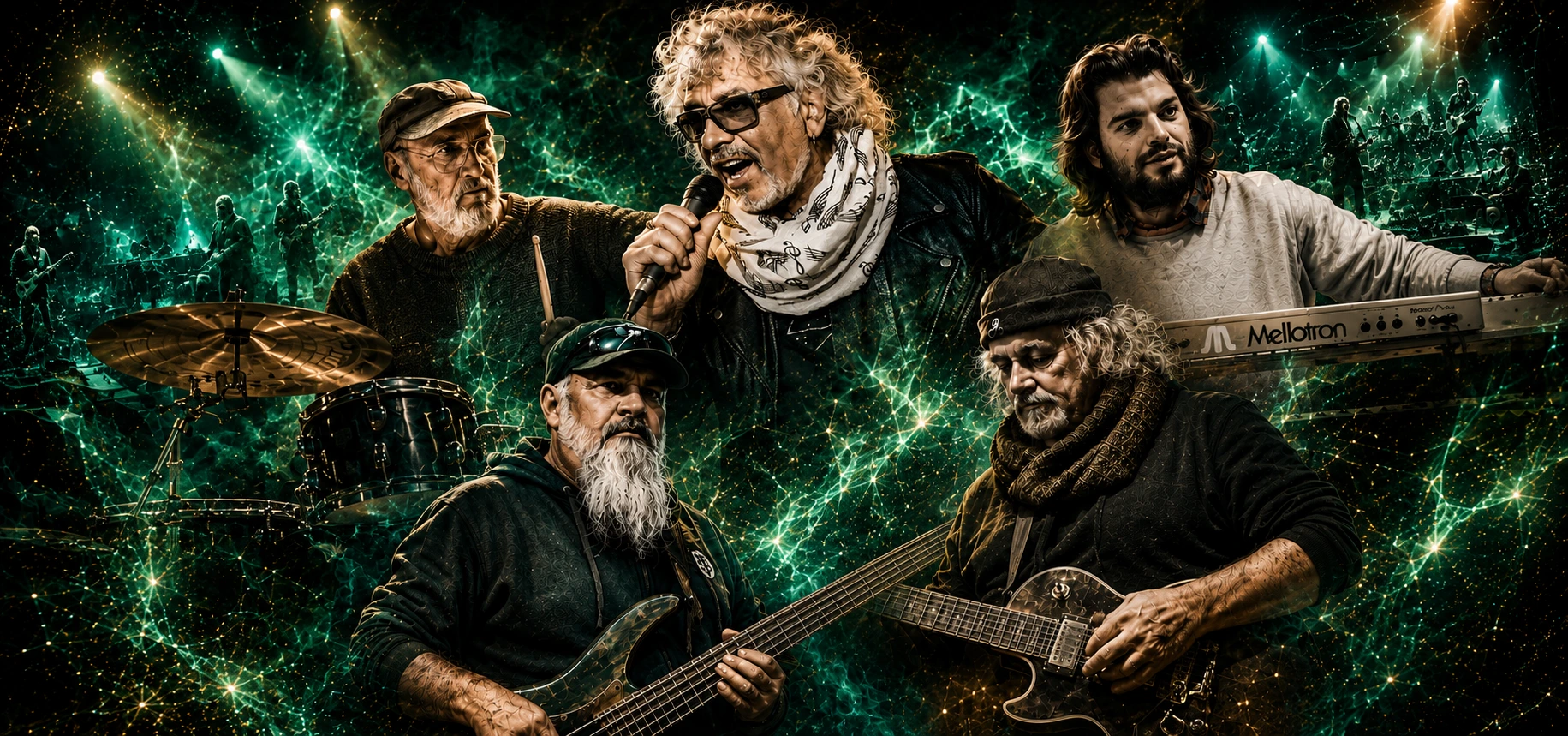

Quetzal live performance and progressive rock drums

Progressive rock drums Odd time signatures, polyrhythms, dynamics and rhythmic movement

The architecture of motion

Rhythm that
tells a story.

In progressive rock, drums do more than keep time. They shape tension, release, contrast and movement across compositions that can shift direction several times within a single piece.

From asymmetric meters to polyrhythms, from delicate cymbal work to powerful ensemble passages, progressive drumming helps define the genre’s identity. It gives long musical structures their internal logic and emotional momentum.

Drums belong to the core of the progressive rock instrument palette, alongside keyboards, guitar, bass and vocals. The drummer connects these voices through timing, dynamics and transitions.

5/4 Odd meter
7/8 Rhythmic motion
Possibilities

Rhythm Time, tension and transformation

Beyond timekeeping

The pulse beneath the journey.

A progressive rock drummer does not simply maintain a beat. The drum part can introduce a new section, destabilize an expected pattern, intensify a climax or create silence before an arrangement opens into another direction.

This ability to combine precision with imagination gives progressive rock its sense of movement. Rhythm becomes a compositional force rather than a fixed background.

Explore all instruments

The rhythmic vocabulary

Beyond
four-four.

Progressive rock expands rhythmic language without abandoning groove. Complex meter is not an end in itself: it creates surprise, tension, contrast and new ways for melodies and riffs to move through time.

01 Odd meter

Asymmetric time signatures

Meters such as 5/4, 7/8, 9/8 and 11/8 break the predictability of standard rock while creating distinctive momentum.

02 Layered rhythm

Polyrhythms

Contrasting rhythmic divisions performed together create layered motion, tension and a feeling of several pulses existing at once.

03 Structural movement

Meter changes

A composition can move from one meter to another to signal a shift in mood, intensity, arrangement or narrative direction.

04 Dynamic control

Contrast and space

Quiet passages, cymbal colour, silence and controlled restraint give powerful sections more impact when the full band returns.

05 Ensemble dialogue

Accents and unison

Drums can lock into guitar, bass and keyboards through shared accents, creating precise ensemble figures and dramatic changes.

06 Musical transition

Fills and transformations

Fills are not just decoration. In progressive rock, they often function as bridges between sections, tempos and musical worlds.

Musical function

What does the progressive drummer bring to a band?

The drummer is the architect of rhythmic continuity and surprise. By shaping pulse, accents, dynamics and transitions, the drum part supports both technical complexity and emotional storytelling.

Pulse

Even in unusual meters, the drummer establishes a physical pulse that allows the listener to feel the music’s movement.

Dynamics

Changes in volume, density and cymbal colour create contrast between intimate passages and large instrumental climaxes.

Structure

Drums mark beginnings, endings, transitions and sectional changes across extended progressive compositions.

Dialogue

The drum kit converses with bass, guitar and keyboards, responding to riffs, melodic phrases and arrangement details.

Rhythmic evolution

From classic prog to modern complexity.

Progressive rock drumming has continually evolved, from the expressive and exploratory playing of classic prog to the technical precision and hybrid approaches of modern progressive music.

1970s

Exploration

Classic prog develops changing meters, extended forms, orchestral dynamics and a more conversational role for drums.

1980s

Precision

Production becomes more detailed, while electronic percussion, new sounds and tighter arrangements influence rhythmic choices.

1990s

Power

Progressive metal and modern prog bring heavier sounds, technical endurance and more explicit rhythmic complexity.

Today

Hybrid language

Contemporary players combine classic prog sensitivity, metal precision, jazz influence, electronic texture and individual sound design.

Questions and answers

FAQ: progressive rock drums.

Essential answers about time signatures, polyrhythms, dynamics and the musical role of drums in progressive rock.

What makes progressive rock drumming different?

Progressive rock drumming often uses odd time signatures, meter changes, polyrhythms, detailed transitions and dynamic contrasts to support long and evolving compositions.

What time signatures are used in progressive rock?

Alongside common meters such as 4/4, progressive rock uses signatures such as 5/4, 7/8, 9/8 and 11/8, often changing between several patterns within the same composition.

What is a polyrhythm in progressive rock?

A polyrhythm combines contrasting rhythmic divisions at the same time. It creates layered movement, rhythmic tension and a sensation of multiple pulses interacting together.

Why are drums important in progressive rock?

Drums guide changes of meter, shape the dynamics of an arrangement, connect sections and provide the rhythmic architecture required by long progressive compositions.