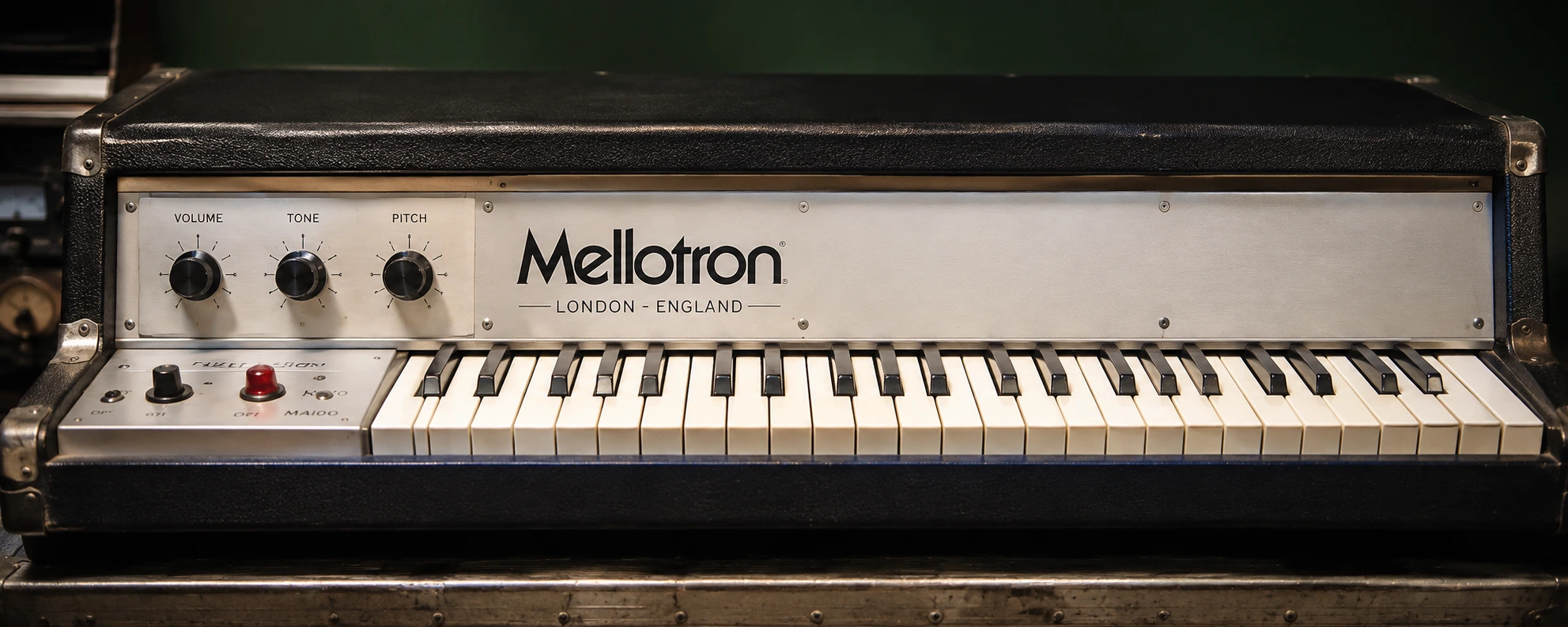

Mellotron Progressive RockHistory, Sound, Famous Bands, Iconic Albums and Lasting Influence
Mellotron Progressive Rock: What Made This Keyboard So Important?
The Mellotron is one of the most influential keyboard instruments in the history of progressive rock. Developed during the 1960s, this electro-mechanical tape replay keyboard enabled musicians to reproduce recorded orchestral textures including strings, choirs, brass and flutes long before the arrival of digital samplers. Its unmistakable character became a defining element of countless progressive rock recordings.
This guide explores Mellotron progressive rock from its origins in the late 1960s to its influence on today’s symphonic and neo-progressive bands.
Within symphonic progressive rock, the Mellotron transformed rock music by bringing the atmosphere of a full orchestra onto the stage. Its rich textures perfectly complemented complex compositions, extended instrumental passages, concept albums and cinematic arrangements, helping shape the distinctive sound of the genre during the late 1960s and throughout the 1970s.
What is a Mellotron in Progressive Rock?
A Mellotron in progressive rock is an electro-mechanical keyboard instrument that plays individual prerecorded tape recordings of orchestral sounds for each key. It enabled progressive rock bands to reproduce strings, choirs, flutes and brass without a live orchestra, becoming one of the defining instruments of symphonic progressive rock thanks to its rich, atmospheric and unmistakable sound.
Legendary musicians including Tony Banks (Genesis), Robert Fripp (King Crimson), members of Yes, Camel and PFM used the Mellotron to create expansive soundscapes that became a hallmark of classic progressive rock. Its distinctive timbre continues to inspire modern symphonic and neo-progressive rock bands today.
On this page
What Is a Mellotron? History, Technology and Sound
The Mellotron revolutionized modern music by bringing orchestral textures within reach of rock musicians. Unlike synthesizers, which generate sounds electronically, it reproduces authentic recordings of real instruments using a magnetic tape replay system built into every key.
Each note on the keyboard is connected to its own strip of prerecorded tape containing performances by string players, flautists, brass musicians or choirs. This groundbreaking technology enabled performers to recreate rich symphonic textures on stage decades before digital sampling became available, opening entirely new creative possibilities for composers and performers.
How Does a Mellotron Work?
A Mellotron works by pulling an individual strip of magnetic tape across a playback head each time a key is pressed. Every tape plays for approximately eight seconds before automatically rewinding when the key is released. This entirely mechanical process gives the instrument its expressive dynamics, gentle pitch fluctuations and unmistakable vintage character that musicians still value today.
Originally developed in England during the early 1960s, the Mellotron quickly gained recognition among adventurous artists seeking to blend rock with classical music, film-inspired orchestration and experimental composition. Its tape-based orchestral textures made it possible to create grand, cinematic arrangements without the expense or complexity of recording a full orchestra.
Although the instrument required regular maintenance and was known for occasional tuning instability, tape wear and mechanical fragility, these imperfections became an essential part of its appeal. Rather than flaws, they contributed warmth, depth and personality to every performance, helping establish the Mellotron as one of the defining instruments of classic progressive rock and the unmistakable sound of symphonic progressive rock.
The Evolution of the Mellotron and the Birth of Progressive Rock
The evolution of the Mellotron spans more than six decades, from the early tape-based keyboards of the 1940s and 1950s to modern digital recreations used in contemporary progressive rock. Each stage in this story reflects changes in technology, manufacturing and the way musicians approach sound creation.
In the 1940s and 1950s, American inventor Harry Chamberlin developed the first keyboard instruments to use individual prerecorded tape strips for each note. These early Chamberlin models demonstrated the potential of tape-based sound, but remained rare and mechanically complex. In the early 1960s, British engineers from Bradmatic Ltd examined the Chamberlin and created their own, more compact and reliable version, which they marketed under the new name Mellotron.
The emergence of the Mellotron in progressive rock coincided with a period of remarkable musical innovation during the late 1960s. As artists sought to move beyond conventional rock formats, they embraced longer compositions, conceptual storytelling and a richer musical language inspired by classical music, jazz and experimental art.
The Mellotron quickly became one of the defining instruments of this creative movement. By placing tape-based orchestral voices at the fingertips of keyboard players, it enabled bands to build sweeping introductions, haunting interludes and powerful climaxes that would become hallmarks of the progressive rock sound.
From the Moody Blues' Days of Future Passed (1967) to King Crimson's In the Court of the Crimson King (1969) and Genesis' early albums such as Nursery Cryme (1971) and Foxtrot (1972), pioneering groups demonstrated how the instrument could transform a traditional rock band into a symphonic ensemble. Its rich layers of strings, choirs and flutes helped create immersive musical landscapes unlike anything heard in mainstream rock at the time.
"The Mellotron bridged the gap between the energy of rock music and the grandeur of a symphony orchestra, becoming one of the defining sounds of progressive rock."
During the late 1960s and 1970s, the Mellotron became a cornerstone of symphonic progressive rock. Models such as the M400 and M300 were used by bands like King Crimson, Genesis, Yes and The Moody Blues to create orchestral textures without a full orchestra. From the 1990s onwards, digital samples and modern hardware recreations extended the instrument's reach, allowing new generations of progressive rock musicians to access the classic Mellotron character without the fragility of vintage tape mechanisms.
Today, instruments such as the Mellotron M4000D, Mellotron Micro and software emulations continue this evolution, preserving the iconic strings, choirs and flutes while adapting to contemporary production environments. Although later complemented by synthesizers such as the Minimoog and polyphonic keyboards, the Mellotron retained a unique warmth and expressive character. Its unmistakable sound became a cornerstone of symphonic progressive rock and continues to inspire musicians seeking authentic vintage textures in contemporary progressive music.
The Greatest Progressive Rock Bands Using Mellotron
Few instruments have shaped the identity of progressive rock as profoundly as the Mellotron. During the late 1960s and throughout the golden era of the 1970s, many pioneering bands adopted this revolutionary keyboard to recreate orchestral arrangements, expand their sonic palette and compose music that blurred the boundaries between rock, classical music and cinematic soundtracks.
Whether used for sweeping string sections, haunting choirs or expressive flute voices, the Mellotron became one of the defining sounds of symphonic progressive rock. The following bands transformed its distinctive character into some of the most iconic recordings in progressive rock history.
| Band | How the Mellotron Shaped Their Sound |
|---|---|
| Genesis | Keyboardist Tony Banks made the Mellotron a cornerstone of Genesis' early sound. Albums such as Nursery Cryme, Foxtrot and Selling England by the Pound feature majestic string and choir textures that helped define the band's symphonic identity alongside Peter Gabriel's storytelling and Steve Hackett's expressive guitar work. |
| King Crimson | Few recordings showcase the Mellotron more dramatically than In the Court of the Crimson King. Under the direction of Robert Fripp, the instrument produced powerful orchestral landscapes, haunting choirs and monumental climaxes that became landmarks of progressive rock. |
| Yes | Although famous for Rick Wakeman's synthesizers, Yes also incorporated Mellotron textures to enrich albums such as The Yes Album and Close to the Edge. The instrument added depth to the band's layered harmonies, complex arrangements and expansive musical architecture. |
| The Moody Blues | Long before progressive rock reached its peak, The Moody Blues helped popularize the Mellotron with Days of Future Passed. Their pioneering fusion of rock, orchestral music and poetic songwriting inspired an entire generation of progressive musicians. |
| Van der Graaf Generator | Blending the Mellotron with saxophone, organ and Peter Hammill's dramatic vocals, Van der Graaf Generator created dark, experimental and emotionally intense soundscapes that pushed progressive rock into more avant-garde territory. |
| Camel | Camel employed the Mellotron with remarkable subtlety, using warm orchestral layers to enhance melodic guitar themes and instrumental storytelling on classics such as Mirage, The Snow Goose and Moonmadness. |
| Premiata Forneria Marconi (PFM) | Italy's legendary progressive rock band combined Mellotron textures with virtuoso musicianship and classical influences, helping establish symphonic progressive rock beyond the United Kingdom and demonstrating the instrument's international appeal. |
| IQ | One of the leading bands of the neo-progressive rock movement, IQ continued the Mellotron tradition by blending vintage keyboard textures with modern production, proving that its timeless sound remains central to progressive music today. |
Although digital keyboards can accurately reproduce Mellotron sounds today, many musicians and collectors still regard the original instrument as irreplaceable. Its characteristic tape saturation, subtle pitch variations and organic imperfections continue to define the authentic sound of classic progressive rock and remain a source of inspiration for contemporary symphonic and neo-progressive bands around the world.
Six Essential Mellotron Songs to Hear Its Progressive Rock Power
Reading about the Mellotron is one thing; hearing its tape-based strings, choirs and brass in context is another. These recordings reveal how progressive rock musicians used the instrument in very different ways: as a symphonic backdrop, a dramatic introduction, a dark textural layer or a subtle source of atmosphere.
| Artist | Song | What to Listen For |
|---|---|---|
| The Moody Blues | Nights in White Satin (1967) | One of the earliest major Mellotron statements in rock: an emotional, orchestral texture supporting a memorable melody and chord sequence. |
| King Crimson | In the Court of the Crimson King (1969) | Dense, dramatic Mellotron layers with a darker and rougher edge than conventional orchestral imitation — a foundational progressive rock sound. |
| Genesis | Watcher of the Skies (1972) | Tony Banks' monumental Mellotron brass introduction is one of the clearest examples of how the instrument could make a rock band sound epic. |
| Focus | Le Clochard (1971) | Choir-like and orchestral Mellotron chords create an expansive backdrop for Jan Akkerman's expressive guitar work. |
| Gracious! | The Dream (1970) | A lesser-known but excellent example of Mellotron used to punctuate a long-form progressive rock composition with majestic colour. |
| Radiohead | Exit Music (For a Film) (1997) | A more restrained, modern use: the Mellotron contributes space, tension and a panoramic atmosphere rather than overt symphonic grandeur. |
Together, these songs show that the Mellotron was never simply a substitute for an orchestra. Its imperfect tape texture became an expressive instrument in its own right — capable of sounding majestic, fragile, unsettling or deeply nostalgic.
For a beginner-friendly introduction to these tracks, see the guide The Mellotron: A beginner's guide in six essential songs (Louder).
Famous Mellotron Songs: The Most Iconic Tracks Featuring the Mellotron
Beyond the six essential recordings above, certain famous Mellotron songs have become inseparable from the history of progressive rock. These tracks are often the first that come to mind when talking about the instrument’s impact, and they remain key reference points for musicians and fans alike.
Core Progressive Rock Classics
-
King Crimson – In the Court of the Crimson King (1969)
Dense, dramatic Mellotron layers create a dark, orchestral atmosphere that became a blueprint for symphonic progressive rock. -
Genesis – Watcher of the Skies (1972)
Tony Banks’ monumental Mellotron brass introduction is one of the most famous Mellotron moments in progressive rock history. -
Yes – And You and I (1972)
Warm string ensembles and atmospheric Mellotron textures enrich the band’s layered harmonies and expansive arrangements. -
Genesis – Dancing with the Moonlit Knight (1973)
Orchestral Mellotron passages reinforce the theatrical storytelling and dynamic contrasts of Selling England by the Pound. -
The Moody Blues – Nights in White Satin (1967)
One of the earliest and most recognizable uses of the Mellotron in rock, with lush string and choir textures supporting a now-iconic melody. -
Camel – The Snow Goose (1975)
Camel employed the Mellotron with exceptional subtlety, adding elegant orchestral colours and cinematic depth to this instrumental concept album. -
PFM – Photos of Ghosts (1973)
Premiata Forneria Marconi blended Mellotron textures with Italian symphonic traditions and virtuosic musicianship, proving the instrument’s international appeal.
Neo-Progressive and Later Uses
-
IQ – The Wake (1981)
One of the leading neo-progressive bands, IQ continued the Mellotron tradition by blending vintage keyboard textures with modern production. -
Radiohead – Exit Music (For a Film) (1997)
A more restrained, modern use: the Mellotron contributes space, tension and a panoramic atmosphere rather than overt symphonic grandeur. -
Porcupine Tree – Trains (2002)
Subtle Mellotron-inspired textures add warmth and nostalgia to this modern progressive rock classic.
Together, these famous Mellotron songs show how the instrument moved from a novel studio effect to a defining voice in progressive rock, and later to a timeless source of atmosphere for new generations of artists.
The Mellotron and the Sound of Symphonic Progressive Rock
The connection between the Mellotron and symphonic progressive rock is fundamental to the evolution of the genre. By reproducing recorded orchestral textures from a keyboard, the Mellotron enabled musicians to blend the power of rock with the richness of classical music, creating expansive compositions that sounded both cinematic and deeply emotional.
Its unmistakable string ensembles, ethereal choirs, expressive flutes and powerful brass voices transformed the role of the keyboard player. Rather than simply providing harmony, the Mellotron became an orchestral instrument capable of shaping dramatic introductions, dynamic crescendos, atmospheric interludes and majestic finales that defined the golden age of progressive rock.
Bands such as Genesis, King Crimson, Yes, Camel, PFM and The Moody Blues embraced the instrument to create rich sonic landscapes that became synonymous with symphonic progressive rock. Its warm analogue character and subtle tape imperfections gave every performance an organic depth that modern digital instruments continue to emulate.
Why the Mellotron Became a Progressive Rock Icon
More than an innovative keyboard, the Mellotron embodied the artistic vision of progressive rock. It allowed composers to tell musical stories with orchestral colour, emotional depth and cinematic scale while preserving the spontaneity and energy of a live rock performance. Few instruments have had such a lasting influence on the sound, identity and imagination of progressive rock.
Although contemporary keyboards and software libraries can accurately reproduce its famous sounds, many musicians still prefer original Mellotrons or faithful recreations for their authentic tape saturation, expressive dynamics and unmistakable vintage character. More than sixty years after its introduction, the Mellotron remains one of the defining symbols of classic and modern symphonic progressive rock, continuing to inspire artists around the world.
The Evolution of the Mellotron: From Vintage Instrument to Modern Progressive Rock
Although the original Mellotron was created more than half a century ago, its influence continues to shape the sound of progressive rock. From the vintage recordings of the 1960s and 1970s to modern digital recreations, the Mellotron remains a powerful symbol of musical exploration.
During its early years, the Mellotron was admired for its unique ability to bring orchestral textures to the stage. However, its mechanical complexity, size and maintenance requirements made it difficult for many musicians to use regularly.
The arrival of digital technology transformed access to the Mellotron sound. Today, musicians can use software instruments, virtual keyboards and digital libraries that reproduce the characteristic strings, choirs and flute sounds of the original instrument.
The Mellotron in Modern Progressive Rock
Modern progressive rock bands continue to use Mellotron-inspired sounds to create atmospheric and symphonic arrangements. While contemporary keyboards offer unlimited possibilities, many musicians still search for the distinctive warmth and imperfection of the original tape-based instrument.
The Mellotron remains particularly appreciated in styles influenced by the classic progressive rock tradition, including symphonic progressive rock, neo-progressive rock and experimental rock.
Why Is the Mellotron Still Important Today?
- It creates instantly recognizable orchestral textures.
- It connects modern progressive rock with the heritage of the 1970s.
- It adds emotional depth and cinematic atmosphere to compositions.
- It represents the experimental spirit that defines progressive music.
For many artists, the Mellotron is not simply a nostalgic instrument. It is a creative tool that continues to inspire new generations of musicians searching for a unique and expressive sound.
Mellotron, Synthesizers and Progressive Rock Keyboards
The evolution of progressive rock keyboards reflects the constant search for new musical possibilities. The Mellotron was among the first instruments to give rock musicians access to authentic orchestral voices, allowing bands to expand beyond the limitations of the traditional guitar, bass and drums lineup. Its arrival paved the way for a new generation of keyboard instruments that would redefine the sound of progressive rock.
As the genre evolved throughout the 1970s, keyboard players combined the Mellotron with the Hammond organ, the Minimoog, electric pianos and early polyphonic synthesizers. Each instrument brought its own personality, from warm analogue textures and expressive lead solos to rich orchestral layers and atmospheric soundscapes. Together, they created the complex keyboard arrangements that became one of the defining characteristics of symphonic progressive rock.
| Keyboard Instrument | Contribution to Progressive Rock |
|---|---|
| Mellotron | Introduced tape-based orchestral strings, choirs, flutes and brass, making symphonic arrangements possible without a live orchestra and defining the classic sound of progressive rock. |
| Hammond Organ | Delivered powerful harmonic foundations, expressive solos and the warm analogue tone heard in countless progressive rock classics. |
| Minimoog | Revolutionized progressive rock with soaring lead melodies, deep bass lines and innovative analogue synthesizer sounds that became synonymous with the genre. |
| Electric Piano | Added smooth harmonic textures, melodic accompaniment and subtle rhythmic colour, balancing the grandeur of larger keyboard arrangements. |
| Polyphonic Synthesizers | Expanded the sonic palette with lush pads, evolving textures and layered harmonies that complemented the Mellotron's orchestral character during the late 1970s and beyond. |
Legendary keyboardists such as Tony Banks, Rick Wakeman, Keith Emerson, Patrick Moraz and Peter Bardens demonstrated how these complementary instruments could be combined to produce some of the most ambitious recordings in rock history. Their innovative use of keyboards established a musical vocabulary that continues to influence progressive, symphonic and neo-progressive rock today.
The Most Iconic Mellotron Moments in Progressive Rock History
Some of the greatest moments in progressive rock owe their emotional power to the unmistakable sound of the Mellotron. More than a keyboard, it became a storytelling instrument capable of creating orchestral grandeur, haunting atmospheres and unforgettable musical landscapes. From the birth of progressive rock in the late 1960s to the golden era of the 1970s, its distinctive tape-based sound shaped many of the genre's most celebrated recordings.
Whether introducing an epic composition with thunderous brass, surrounding a melody with ethereal choirs or adding sweeping string arrangements, the Mellotron helped transform ambitious ideas into timeless classics. The following recordings remain among the finest examples of its influence on progressive and symphonic rock music.
| Band and Song | Why This Mellotron Performance Became Legendary |
|---|---|
| Genesis – Watcher of the Skies | Tony Banks created one of the most iconic Mellotron introductions in rock history by combining powerful brass tapes with orchestral textures. The opening instantly established the epic and symphonic identity of classic Genesis and remains one of the instrument's defining performances. |
| King Crimson – In the Court of the Crimson King | Robert Fripp's band used the Mellotron to build monumental orchestral soundscapes, majestic choirs and dramatic climaxes. The instrument became inseparable from one of the most influential albums ever released in progressive rock. |
| The Moody Blues – Nights in White Satin | One of the earliest international successes featuring the Mellotron, this classic recording demonstrated how tape-based orchestral sounds could merge rock, classical music and emotional songwriting, inspiring countless progressive rock musicians. |
| Yes – And You and I | The Mellotron enriched Yes' layered arrangements with warm string ensembles and atmospheric textures, complementing the band's intricate harmonies and expansive musical compositions. |
| Genesis – Dancing with the Moonlit Knight | Orchestral Mellotron passages reinforce the theatrical storytelling and dynamic contrasts that made Selling England by the Pound one of the defining albums of symphonic progressive rock. |
| Van der Graaf Generator – Pioneers Over C | Combined with organ, saxophone and Peter Hammill's expressive vocals, the Mellotron intensified the band's dark, experimental atmosphere and demonstrated its remarkable versatility beyond traditional symphonic arrangements. |
| Camel – The Snow Goose | Camel employed the Mellotron with exceptional subtlety, adding elegant orchestral colours and cinematic depth to one of progressive rock's most celebrated instrumental concept albums. |
| PFM – Photos of Ghosts | Premiata Forneria Marconi blended Mellotron textures with Italian symphonic traditions and virtuosic musicianship, proving that the instrument's influence extended far beyond the British progressive rock scene. |
These landmark recordings illustrate why the Mellotron became far more than an innovative keyboard. Its characteristic tape saturation, subtle pitch variations and authentic orchestral voices established a sound that remains inseparable from the history of progressive rock. More than six decades after its invention, the Mellotron continues to inspire musicians seeking the timeless atmosphere of classic symphonic progressive rock.
Why the Mellotron Became a Symbol of Progressive Rock
The importance of the Mellotron in progressive rock goes far beyond its technical design. This unique keyboard became a symbol of a musical movement that sought to expand the possibilities of rock through orchestral textures, complex arrangements and atmospheric soundscapes.
During the golden age of progressive rock, musicians were looking for new ways to create depth, drama and contrast within extended compositions. The Mellotron offered a revolutionary solution by bringing choir, strings and orchestral colors into the studio without the need for a complete ensemble.
A Keyboard Designed for Musical Imagination
Unlike traditional keyboards, the Mellotron did not simply reproduce familiar piano or organ sounds. Its tape-based system allowed artists to introduce the illusion of orchestras, choirs and acoustic instruments into a rock environment.
This unique capability made it a defining instrument for progressive rock bands influenced by classical composition, film music and experimental approaches. Groups such as Genesis, King Crimson and The Moody Blues transformed its distinctive sound into an essential part of their musical identity.
The Emotional Power of the Mellotron Sound
The slightly imperfect nature of the original tape mechanism gave the Mellotron a warm, organic and human character. Small variations in pitch, timing and texture created a sound that felt different from the precision of modern digital instruments.
For progressive rock musicians, these imperfections became creative strengths. They added mystery, nostalgia and emotional depth, helping create some of the most memorable atmospheric passages in the history of the genre.
The Mellotron Legacy
The Mellotron remains one of the rare instruments that can be identified after only a few seconds of listening. Its unmistakable sound represents experimentation, musical exploration and the artistic freedom that continues to define progressive rock today.
Mellotron vs Modern Synthesizers
Why progressive rock musicians still choose Mellotron sounds instead of modern synthesizers ?
When comparing a Mellotron vs modern synthesizers, the key distinction is that the Mellotron plays recordings of real instruments on magnetic tape, while modern synthesizers generate and shape sounds electronically.
Modern keyboard technology has transformed music production, offering musicians almost unlimited possibilities for creating and shaping sounds. Yet the Mellotron remains highly valued in progressive rock and symphonic progressive rock because of its distinctive character and historical importance.
The difference between a Mellotron and a modern synthesizer is not only technical. It reflects two different approaches to sound creation: one based on the natural imperfections of recorded instruments, and the other focused on precision, flexibility and digital control.
| Mellotron | Modern Synthesizers |
|---|---|
| Uses individual prerecorded tape recordings of real instruments such as strings, choirs and flutes. | Creates sounds through electronic synthesis, sampling and advanced digital processing. |
| Known for warm textures, vintage character and subtle variations created by its mechanical system. | Provides extensive control, accuracy and virtually unlimited sound design possibilities. |
| Strongly associated with classic progressive rock, symphonic arrangements and atmospheric compositions. | Used across many genres including progressive music, electronic music and film scoring. |
| Creates emotional depth through authentic vintage keyboard textures. | Allows musicians to design completely new sonic environments. |
Why Progressive Rock Musicians Still Choose Mellotron Sounds
The appeal of the Mellotron comes from its immediate ability to create atmosphere. A few seconds of Mellotron strings or choir can introduce a cinematic dimension and transform a simple musical passage into a memorable moment.
For progressive rock artists, where storytelling, composition and emotional development play a central role, this expressive quality remains extremely valuable. Many modern musicians still use Mellotron sounds or digital recreations because they connect contemporary productions with the heritage of the classic progressive era.
A Timeless Progressive Rock Keyboard Sound
The Mellotron demonstrates that musical innovation is not always about replacing the past. Some instruments remain relevant because their imperfections, personality and sonic identity continue to inspire new generations of progressive rock musicians.
The Mellotron in Symphonic Progressive Rock Today
Although modern keyboards can reproduce an almost unlimited range of sounds, the Mellotron remains one of the most recognizable instruments in symphonic progressive rock. Its distinctive tape-based strings, choirs and flutes continue to inspire musicians searching for depth, atmosphere and authentic vintage keyboard textures.
Rather than disappearing with the arrival of digital technology, the Mellotron has evolved into a lasting artistic reference. Contemporary progressive rock musicians combine its unique character with modern production methods, creating a bridge between the classic era of the genre and today's creative approaches.
Quetzal: A Contemporary French Progressive Rock Vision
The French progressive rock band Quetzal carries this spirit forward by combining symphonic arrangements, melodic songwriting and rich keyboard atmospheres inspired by the pioneers of progressive music. Instead of simply reproducing the past, Quetzal transforms these influences into an original musical identity.

Across the band's music, listeners can find the same artistic ambition that defined classic progressive rock albums: immersive atmospheres, expressive keyboards, evolving structures and a strong focus on emotion. The Mellotron's orchestral character remains an important influence within this creative universe.
The Legacy Lives On
Following the path opened by legendary groups such as Genesis, King Crimson and Yes, Quetzal represents a modern expression of symphonic progressive rock. The Mellotron remains more than a vintage keyboard: it is a symbol of exploration, imagination and the timeless artistic freedom at the heart of progressive music.
The Mellotron Legacy: Why This Instrument Still Matters
More than sixty years after its creation, the Mellotron remains one of the defining sounds of progressive rock history. Its influence goes beyond the instrument itself, representing a creative approach where technology, composition and musical storytelling come together.
How New Generations Discover the Mellotron
For many young musicians, the first encounter with the Mellotron does not happen in a museum or a vintage studio, but through modern production tools. Digital audio workstations, virtual instruments and sample libraries make its characteristic strings, choirs and flutes instantly accessible, even to artists who have never seen a physical Mellotron.
This democratization has transformed the instrument from a rare and expensive piece of hardware into a shared sonic reference. Producers and composers in progressive rock, post-rock, ambient and film scoring can now experiment with Mellotron-inspired textures without needing to own or maintain the original machine.
From Preservation to Creative Reuse
At the same time, a parallel movement focuses on preserving and restoring original Mellotrons. Collectors, technicians and dedicated companies keep these instruments alive, ensuring that the authentic tape-based sound remains available for recordings and live performances. This combination of preservation and digital emulation guarantees that the Mellotron continues to exist both as a historical artifact and as a living creative tool.
The Sound of Musical Exploration
The Mellotron became a symbol of artistic freedom within progressive rock. Its lasting appeal comes from its ability to connect the past and the present, inspiring musicians who continue to explore new ways of creating expressive and immersive music.
Frequently Asked Questions About Mellotron in Progressive Rock
A Mellotron in progressive rock is a keyboard instrument that plays individual prerecorded tape recordings of acoustic instruments such as strings, choirs and flutes. It became famous because it allowed rock musicians to create orchestral sounds without a full orchestra.
The Mellotron sound is defined by its tape-based strings, choirs and flutes. Unlike synthesizers, which generate sounds electronically, the Mellotron plays individual prerecorded tape recordings of real instruments, giving it a warm, slightly imperfect and instantly recognizable character. The most famous Mellotron sounds are the three-violin string setting, the ethereal choir tapes and the expressive flute voices.
The Mellotron is associated with progressive rock because it introduced symphonic textures and expanded the creative possibilities of rock keyboards. It helped define the atmospheric and cinematic sound of many classic progressive rock albums.
Many influential progressive rock bands are famous for using the Mellotron, including Genesis, King Crimson, Yes, The Moody Blues, Van der Graaf Generator and Camel. These groups used the instrument to create some of the most memorable keyboard sounds in the genre.
Yes. The Beatles were among the first rock bands to use the Mellotron, most famously on Strawberry Fields Forever (1967), where its flute tapes create the dreamlike introduction. They also used Mellotron textures on tracks such as The Long and Winding Road and I Am the Walrus, helping to popularize the instrument in late-1960s rock.
The most famous Mellotron sound is the three-violin setting, a distinctive string texture that became closely associated with classic progressive rock. Used by legendary bands such as King Crimson, Genesis and other pioneers of the genre, this sound helped create the majestic, emotional and symphonic atmosphere that defines many iconic progressive rock recordings.
Yes. Modern progressive rock musicians still use Mellotron sounds through vintage instruments, restored models and digital recreations. Its unique character remains highly valued for creating emotional and symphonic atmospheres.
A Mellotron plays recordings of real instruments stored on magnetic tape, while a synthesizer creates sounds electronically. The Mellotron is known for its organic imperfections and distinctive vintage character.
The Mellotron M4000D is a modern digital recreation of the classic Mellotron M400. Instead of magnetic tapes, it uses high-quality digital samples of the original sounds. This design preserves the characteristic strings, choirs and flutes while eliminating the mechanical issues, tape wear and tuning instability of vintage instruments.
The Mellotron often sounds sad or haunting because its tape-based strings and choirs have a slow attack, slight pitch instability and limited sustain. These characteristics create a fragile, human quality that contrasts with the power of rock instrumentation, producing an emotional tension that many listeners perceive as melancholic or eerie.
The Mellotron Micro is a compact, portable version of the modern digital Mellotron. It provides the classic Mellotron sounds—strings, choirs and flutes—in a smaller, more affordable format, making it easier for musicians to integrate the iconic Mellotron character into contemporary setups.
Original Mellotrons are occasionally available through specialized vintage keyboard dealers, auction sites and private collectors, but they are rare and often expensive. Modern alternatives such as the Mellotron M4000D, Mellotron Micro and software emulations are more widely available and provide a more accessible way to obtain authentic Mellotron sounds.
Mellotrons can be grouped into three main categories: vintage tape-based instruments such as the M400, M300 and earlier Chamberlin-derived models; modern digital hardware recreations such as the Mellotron M4000D and Mellotron Micro; and software emulations that run inside a computer or digital audio workstation. Each type offers a different balance of authenticity, reliability, cost and portability.
No. The Chamberlin, invented by Harry Chamberlin in the United States in the 1940s and 1950s, was the first keyboard instrument to use prerecorded tape strips for each note. The British Mellotron, developed in the 1960s by Bradmatic Ltd / Mellotronics, was directly inspired by the Chamberlin but is a distinct instrument with its own design, manufacturing and brand.
Original vintage Mellotrons are rare and can be worth several thousand dollars, with prices varying widely depending on model, condition, provenance and market demand. Modern digital recreations such as the Mellotron M4000D and Mellotron Micro are more affordable and widely available, offering a more accessible entry point for musicians seeking authentic Mellotron sounds.
There is no single “best” Mellotron plugin, as the choice depends on your budget, workflow and the specific sounds you need. Popular options include dedicated Mellotron emulations and general tape-based keyboard libraries that offer strings, choirs and flutes inspired by the original instrument. Many producers combine multiple plugins and layer them with modern synthesizers to create their own variation of the classic Mellotron character.