

Progressive Rock Music, history, styles and the evolving world of progressive sound
What Is Progressive Rock?
Progressive rock is a form of rock music built around exploration, development and atmosphere. Instead of treating every song as a fixed verse-and-chorus format, progressive rock allows melodies, rhythms, instrumental themes and moods to evolve over time.
A progressive rock composition can move from a quiet piano introduction to an expansive guitar passage, from a delicate vocal melody to a powerful instrumental climax. The purpose is not complexity for its own sake, but to create contrast, depth and a stronger emotional journey.
Often called prog rock or simply prog, the genre emerged from late-1960s rock music and absorbed ideas from classical music, jazz, folk, psychedelia and experimental recording. Its best-known artists helped establish the album as a complete artistic experience rather than a simple collection of individual songs.
To explore this rich musical tradition, discover essential progressive rock albums through curated listening paths, or learn about influential progressive rock bands that shaped the genre from the 1970s to today.
How Progressive Rock Sounds
There is no single progressive rock sound. Some bands are symphonic and keyboard-driven, others are guitar-led, atmospheric, heavy, electronic, folk-inspired or almost entirely instrumental. What unites them is a willingness to let musical ideas develop beyond conventional boundaries.
Long-Form Compositions
Progressive rock often gives a musical idea time to grow. A song may contain several connected sections, recurring themes, instrumental bridges and changing moods. Length alone does not define prog, but longer formats can give a composition room to unfold naturally.
Changing Rhythms and Dynamics
Many progressive rock pieces shift between calm and intensity, between simple and intricate rhythms, or between acoustic and electric textures. These changes create movement and help the music feel closer to a journey than to a repeated formula.
Keyboards, Guitars and Textures
Guitars, bass and drums remain central, but keyboards often play a major role through piano, organ, synthesiser and Mellotron Progressive Rock. Together, these instruments can create cinematic soundscapes, symphonic colour and powerful rock dynamics.
Storytelling and Atmosphere
Progressive rock frequently uses music to suggest stories, imaginary worlds, landscapes, personal reflection or larger themes. Lyrics can be important, but instrumental music can be equally narrative when melody, harmony and arrangement carry the emotional direction.
A Short History of Progressive Rock
Progressive rock developed during the late 1960s, particularly in the United Kingdom, as musicians began extending the musical possibilities of rock. Artists drew on psychedelic experimentation while adding influences from classical composition, jazz improvisation, folk traditions and studio innovation.
During the 1970s, groups such as Genesis, Yes, King Crimson, Pink Floyd, Emerson, Lake & Palmer and Jethro Tull helped make progressive rock an important part of the international rock landscape. Albums became more ambitious, arrangements more detailed and concerts increasingly theatrical.
France developed its own distinctive progressive rock identity, shaped by experimental approaches, symphonic influences, theatrical expression and a strong artistic personality. This unique French tradition is explored in detail in this guide to French progressive rock.
The genre changed during later decades rather than disappearing. Neo-progressive rock brought renewed emphasis on melody and atmosphere, progressive metal introduced heavier sounds, and many contemporary artists continue to combine classic influences with modern production and personal musical identities.
Progressive rock encompasses a wide range of musical approaches, from symphonic arrangements and melodic neo-prog to progressive metal, atmospheric prog and experimental movements such as Zeuhl. To explore these different styles in greater detail, discover our complete guide to progressive rock subgenres .
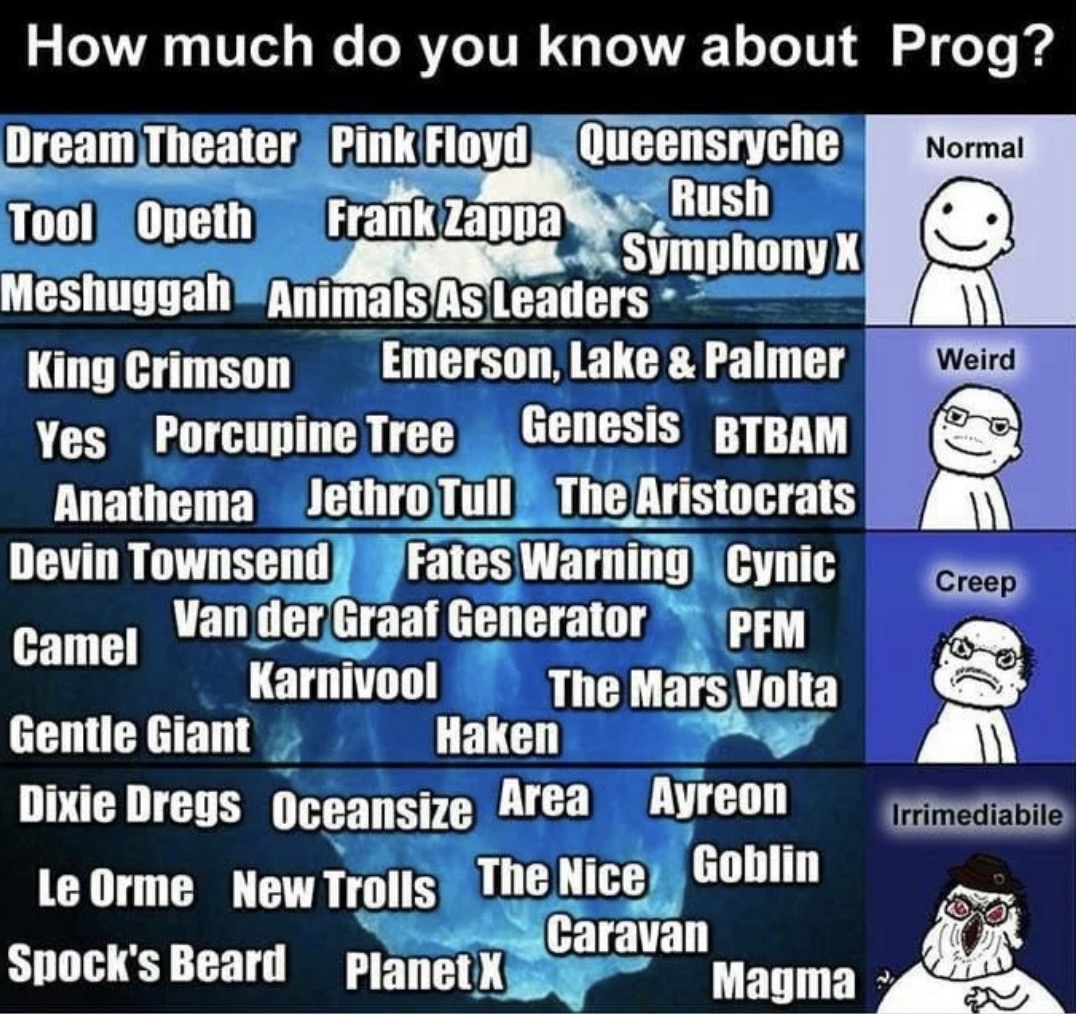
Major Progressive Rock Styles
| Style | Typical characteristics | Listening approach |
|---|---|---|
| Classic progressive rock | Ambitious albums, extended compositions, instrumental development and stylistic variety. | For listeners drawn to the foundational sound of the 1970s. |
| Symphonic progressive rock | Rich keyboard layers, orchestral colour, grand arrangements and dramatic melodic development. | For listeners who enjoy expansive, cinematic musical worlds. |
| Neo-progressive rock | Strong melodies, expressive vocals, atmospheric keyboards and accessible modern songwriting. | For listeners seeking emotion, atmosphere and memorable themes. |
| Progressive metal | Heavier guitars, complex rhythmic structures, technical precision and high-energy arrangements. | For listeners who prefer progressive ideas with a stronger metal foundation. |
| Modern atmospheric prog | Contemporary production, immersive sound design, melodic guitar work and carefully developed moods. | For listeners who appreciate texture, contrast and emotional depth. |
Among the most distinctive progressive rock movements, Zeuhl represents a unique French approach combining powerful rhythms, experimental structures and a highly original musical language.
Progressive Rock Today
Progressive rock remains an active international scene rather than a closed chapter in rock history. Independent bands, specialist labels, concert promoters, festivals, magazines and online communities continue to support musicians who create ambitious and emotionally detailed music.
Contemporary prog artists do not need to reproduce the sound of the 1970s. Some favour vintage instruments and long suites; others use modern production, concise songwriting, electronic textures or heavier arrangements. The common thread is artistic freedom and the desire to make music that rewards attentive listening.
France has its own enduring progressive rock tradition, with artists working across symphonic prog, neo-prog, instrumental music and modern atmospheric rock. Discover more about this wider landscape on the page dedicated to French progressive rock.
Quetzal: French Progressive Rock Today
Quetzal is a French progressive rock band that develops a melodic, symphonic and atmospheric approach to the genre. Its music is built around evolving arrangements, expressive guitar work, keyboards, bass, drums and a strong sense of musical storytelling.
Rather than treating progressive rock as a fixed historical style, Quetzal uses its creative freedom to shape contemporary compositions with contrast, mood and melodic identity. Delicate passages can give way to more powerful sections, while instrumental themes return in new forms as each piece develops.
The band's debut album, Quetzal, released in 2024 on Musea Parallèle, presents seven original compositions that reflect this balance between atmosphere, musical movement and progressive depth.
Explore the band, discover Quetzal's musical universe, browse the official discography or learn more about the wider French progressive rock scene.
Progressive Rock Influences
| Artist | Often associated with | Why listeners explore them |
|---|---|---|
| Genesis | Storytelling, dramatic arrangements and symphonic progressive rock. | For theatrical compositions, memorable themes and changing musical scenes. |
| Yes | Virtuosic musicianship, vocal harmonies and expansive arrangements. | For bright, energetic and highly detailed progressive rock. |
| Pink Floyd | Atmosphere, sound design, conceptual albums and emotional pacing. | For immersive soundscapes and patient musical development. |
| King Crimson | Experimentation, tension, rhythmic invention and stylistic reinvention. | For listeners drawn to adventurous and unpredictable music. |
| Marillion | Neo-progressive rock, expressive vocals and melodic emotional depth. | For accessible songwriting with a strong progressive identity. |
| IQ | Atmospheric keyboards, long-form writing and neo-progressive structures. | For rich arrangements that balance classic and modern prog sensibilities. |
How to Start Listening to Progressive Rock
The best way to discover progressive rock is to follow your own musical preferences. If you enjoy cinematic keyboards and grand arrangements, symphonic prog may be the right starting point. If you prefer emotional vocals and strong melodies, neo-progressive rock can be more immediate. If you like heavier sounds, progressive metal may offer the best entry.
Give complete albums time rather than judging the genre through a single track. Progressive rock is often designed around contrast, recurring themes and gradual development, so a song can reveal more with repeated listening.
For a contemporary melodic and atmospheric entry point, listen to Quetzal through the band's official discography, or visit the music page to explore its musical identity in more detail.
Discover new releases
Recent progressive rock
albums to explore.
Progressive rock remains one of the most active genres in contemporary music. Discover the latest international releases and recent albums from both established and emerging artists.
Frequently Asked Questions About Progressive Rock
What makes rock music progressive?
Progressive rock develops musical ideas over time instead of relying only on short and repeated song formats. It often uses changing arrangements, instrumental passages, contrasting moods and detailed production to create a broader musical journey.
Is progressive rock the same as prog rock?
Yes. Progressive rock is commonly shortened to prog rock or simply prog. The shorter terms are widely used by listeners, musicians, specialist media and festival communities.
Is progressive rock still popular today?
Yes. Progressive rock remains active through established artists, newer independent bands, specialist labels, festivals, magazines, streaming platforms and international fan communities.
What is the difference between progressive rock and progressive metal?
Progressive rock generally places greater emphasis on stylistic variety, melody, atmosphere and keyboards, while progressive metal often uses heavier guitar sounds, more forceful rhythms and a stronger connection to metal production. Many bands naturally overlap both traditions.
What kind of progressive rock does Quetzal play?
Quetzal develops melodic, symphonic and atmospheric progressive rock. The band combines evolving structures, expressive instrumental passages, keyboard textures, guitar-led melodies and a contemporary production approach.
Where can I listen to Quetzal?
Quetzal is available through its official artist pages on Spotify, Apple Music, YouTube and TIDAL. Visit the official discography for album information and direct listening links.