
The Greatest Progressive Metal Bands of All Time
Looking for the best progressive metal bands? This list highlights the most influential and essential prog metal groups, from 1980s pioneers such as Queensrÿche and Fates Warning to modern leaders like Haken and TesseracT.
The greatest progressive metal bands include Dream Theater, Tool, Opeth, Queensrÿche, Fates Warning, Haken and TesseracT, artists who shaped the evolution of prog metal through technical innovation, complex compositions, atmospheric songwriting and musical experimentation. From the pioneers of the late 1980s to modern progressive metal innovators, these influential bands expanded the possibilities of heavy music by combining the power of metal with the creativity and ambition of progressive rock.
| Band | Why They Are Influential | Recommended Starting Point |
|---|---|---|
| Dream Theater | Dream Theater is widely considered one of the most influential progressive metal bands in history. The band popularised the genre worldwide by combining exceptional musicianship, complex song structures, extended compositions and memorable melodies. | Images and Words (1992) |
| Tool | Tool developed a unique progressive metal identity through hypnotic rhythms, atmospheric arrangements, unconventional structures and a strong focus on artistic expression and experimentation. | Lateralus (2001) |
| Opeth | Opeth expanded progressive metal by blending progressive rock, extreme metal, acoustic passages and complex songwriting. Their dynamic approach created one of the most distinctive sounds in modern progressive music. | Blackwater Park (2001) |
| Queensrÿche | Queensrÿche played a fundamental role in the development of progressive metal by introducing conceptual storytelling, sophisticated arrangements, melodic vocals and ambitious heavy metal songwriting. | Operation: Mindcrime (1988) |
| Fates Warning | Fates Warning are recognised as one of the pioneering progressive metal bands. Their innovative approach to rhythm, composition and guitar-driven arrangements helped define the foundations of the genre during the 1980s. | Awaken the Guardian (1986) |
| Haken | Haken represents the modern evolution of progressive metal by combining classic progressive influences, complex arrangements, powerful riffs and contemporary production techniques. | The Mountain (2013) |
| TesseracT | TesseracT became a leading modern progressive metal band through atmospheric compositions, intricate rhythmic patterns and their contribution to the evolution of djent-inspired progressive metal. | Altered State (2013) |
About the Author
This progressive metal guide is written and curated by the team behind Quetzal, a French progressive rock band active since 2013. Over the years, Quetzal has developed a deep understanding of progressive music through composition, live performance, album production and continuous exploration of the genre’s history and modern scene.
The content on this page is based on:
- years of listening to progressive rock and progressive metal, from classic pioneers to contemporary artists;
- detailed analysis of landmark albums, concept records and influential bands;
- ongoing monitoring of new releases, interviews and critical discussions within the progressive community.
Quetzal’s approach combines the perspective of musicians, producers and passionate fans, with a focus on accuracy, clarity and musical depth. This guide is regularly updated to reflect new discoveries and evolving trends in progressive metal.
What Is Progressive Metal?
Progressive metal, also known as prog metal, is a subgenre of heavy metal that combines the power and intensity of metal with the complexity, experimentation and musical ambition of progressive rock. It is characterised by complex compositions, unusual time signatures, technical musicianship, extended instrumental passages, atmospheric contrasts and a constant search for new musical possibilities. Emerging in the late 1980s, progressive metal has become one of the most innovative forms of modern heavy music.
Emerging in the late 1980s, progressive metal was shaped by influential bands such as Rush, Queensrÿche and Fates Warning, before achieving worldwide recognition through groups including Dream Theater, Tool and Opeth.
Today, progressive metal is one of the most innovative forms of modern progressive music, blending metal aggression with atmospheric textures, classical influences, jazz-inspired arrangements and experimental songwriting.
The Origins of Progressive Metal: From Rush to Fates Warning
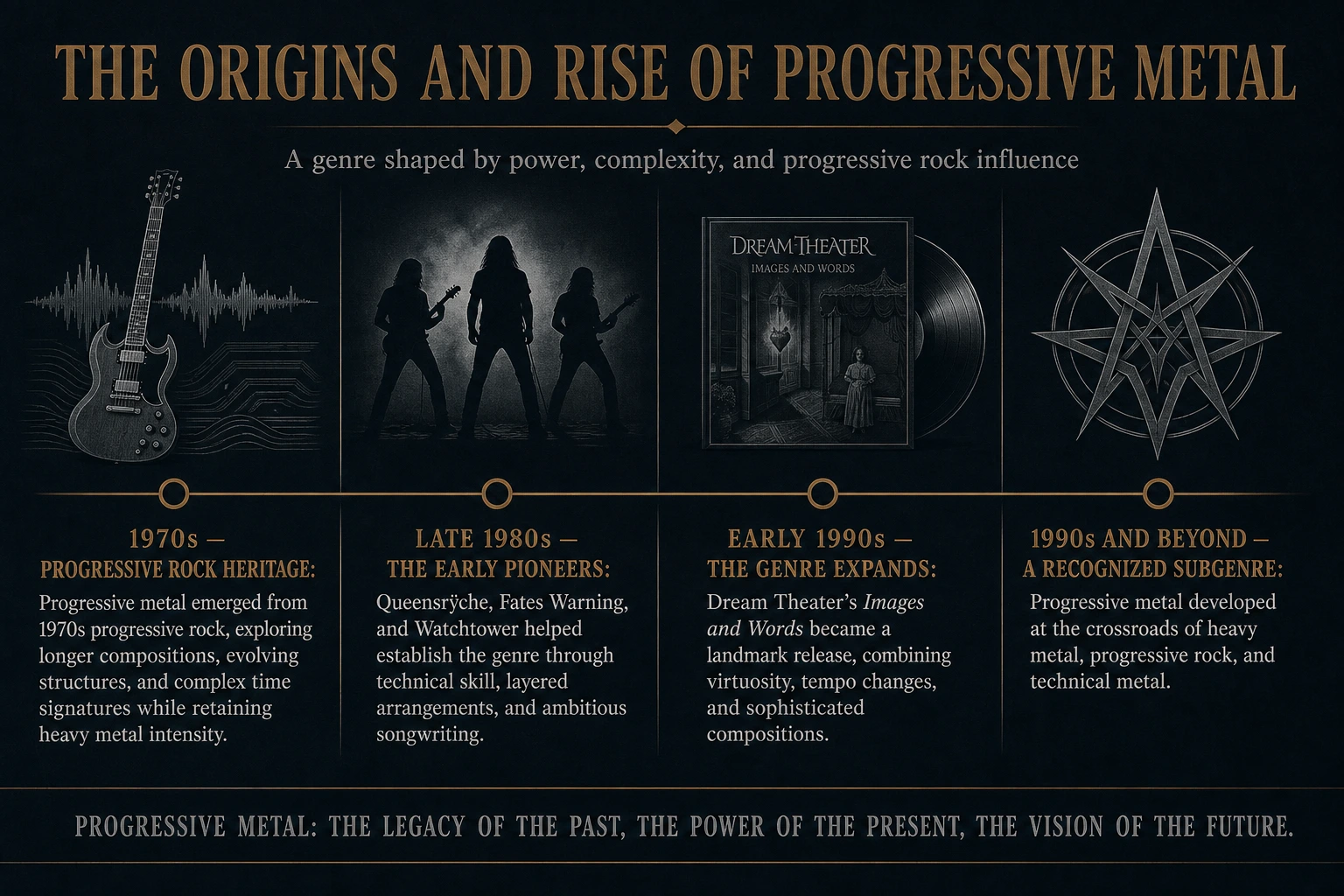
Progressive metal emerged in the late 1980s as a fusion between the complexity of progressive rock and the power of heavy metal, building on the experimental approach of pioneers such as Rush and other influential 1970s artists. The foundations of the genre were shaped by musicians who explored longer compositions, complex rhythms, technical arrangements and ambitious guitar-driven songwriting, creating a bridge between progressive rock and heavier music.
| Band | Role in Progressive Metal History |
|---|---|
| Rush | Rush created an essential connection between progressive rock and heavier music through complex structures, virtuosic performances and landmark compositions such as "2112". Their influence became a foundation for future progressive metal musicians. |
| Queensrÿche | Queensrÿche helped define the early progressive metal sound by combining heavy guitar work, conceptual albums, melodic vocals and sophisticated songwriting. |
| Dream Theater | Dream Theater brought progressive metal to a worldwide audience during the 1990s by combining technical virtuosity, complex compositions and accessible songwriting. |
| Fates Warning | Fates Warning are widely regarded as one of the first true progressive metal bands, introducing complex rhythms, atmospheric arrangements and technically demanding compositions that shaped the emerging genre. |
To discover the genre's most influential recordings, explore best progressive metal albums combining technical musicianship, heavy guitars and complex compositions, or meet the progressive rock bands that defined the style from Queensrÿche to Dream Theater and beyond.
Progressive Metal Timeline: From the 1980s to Today
The history of progressive metal reflects the continuous evolution of heavy music, from the progressive rock influences of the 1970s to the modern experimental approaches of today's artists. Over several decades, progressive metal has developed from a niche movement into one of the most innovative and technically ambitious forms of contemporary metal, shaped by different eras, regional scenes and influential labels.
| Period | Evolution of Progressive Metal | Key Artists and Developments |
|---|---|---|
| 1970s: Progressive Foundations | The foundations of progressive metal were created through progressive rock pioneers who introduced complex compositions, unusual structures, extended instrumental passages and ambitious musical concepts. | Rush, King Crimson, Yes and other progressive rock innovators influenced future metal musicians by expanding the possibilities of rock music. |
| 1980s: The Birth of Progressive Metal | Progressive metal emerged as musicians combined the complexity of progressive rock with the power, distortion and intensity of heavy metal. | Queensrÿche and Fates Warning became two of the earliest bands to define the genre through sophisticated songwriting, conceptual albums and complex arrangements. |
| 1990s: Global Recognition | Progressive metal reached a wider international audience by combining technical musicianship, memorable compositions and ambitious album formats. | Dream Theater became one of the genre's most influential bands with releases such as Images and Words, while other artists expanded the boundaries of progressive metal. |
| 2000s: Expansion and Experimentation | The genre diversified through heavier, darker and more experimental approaches, incorporating alternative metal, extreme metal, atmospheric elements and unconventional structures. | Tool, Opeth and many modern progressive metal artists introduced new approaches to rhythm, songwriting and musical atmosphere. |
| 2010s: New Progressive Metal Movements | Progressive metal continued evolving through new techniques, digital production and hybrid styles combining precision, atmosphere and extreme rhythmic complexity. | Djent-inspired bands such as TesseracT, Periphery and Animals as Leaders brought new rhythmic approaches and extended the vocabulary of modern progressive metal. |
| Today: A Constantly Evolving Genre | Modern progressive metal continues to explore new combinations of metal, progressive rock, electronic music, jazz, classical influences and experimental sound design. | Bands such as Haken, Leprous, Caligula's Horse and many contemporary artists demonstrate the continuing creativity and diversity of the genre. |
From its progressive rock roots to today's hybrid and experimental forms, progressive metal has remained defined by one central idea: pushing musical boundaries while combining technical mastery with artistic expression.
Where to Start With Progressive Metal: 5 Albums, 5 Bands, 5 Tracks
If you are new to progressive metal, the best way to start is through a small selection of essential albums, influential bands and representative tracks that capture the core sound and diversity of the genre. This short list focuses on accessibility, musical quality and historical importance, offering a clear entry point for listeners who want to understand what makes progressive metal unique.
| Category | Recommendations | Why Start Here |
|---|---|---|
| 5 Starter Albums |
|
These five albums represent different eras and styles of progressive metal, from technical virtuosity and concept albums to atmospheric songwriting and modern production. |
| 5 Starter Bands |
|
These groups shaped the genre through landmark recordings, complex compositions and a strong influence on later progressive metal artists. |
| 5 Starter Tracks |
|
These songs combine memorable melodies, progressive structures and representative production, making them ideal first listens for new fans. |
The Golden Era of Progressive Metal: Dream Theater, Tool and Opeth
The golden era of progressive metal refers to the 1990s, when the genre achieved worldwide recognition through bands such as Dream Theater, Tool and Opeth, which expanded progressive metal with technical innovation, experimental songwriting and diverse musical influences. During this period, a new generation of musicians developed the foundations created by Rush, Queensrÿche and Fates Warning by combining heavy metal power with progressive rock complexity.
Among the most influential progressive metal bands of this era, Dream Theater, Tool and Opeth became essential references, each creating a unique approach to technical musicianship, emotional expression and progressive experimentation.
Characteristics of Progressive Metal: Sound, Structure and Influences
Progressive metal is a subgenre of heavy metal that combines metal power with the complexity, experimentation and musical ambition of progressive rock. While every band develops its own approach, the genre is frequently associated with complex song structures, unusual time signatures, technical musicianship, concept albums, atmospheric contrasts and influences from jazz, classical music and electronic music.
- Complex compositions: progressive metal often uses long song structures, multiple sections and unconventional arrangements rather than traditional verse-chorus formulas.
- Technical musicianship and virtuosity: many progressive metal musicians are recognised for advanced instrumental skills, including complex guitar techniques, intricate drumming and sophisticated keyboard arrangements.
- Unusual rhythms and time signatures: the genre frequently explores changing meters, polyrhythms and rhythmic experimentation influenced by progressive rock and jazz.
- Concept albums and storytelling: many progressive metal artists create ambitious albums built around narratives, philosophical ideas or complex thematic concepts.
- Progressive songwriting: progressive metal often prioritizes musical exploration, unexpected transitions and emotional development rather than conventional song formulas.
- Atmospheric contrast: progressive metal often combines powerful heavy passages with cinematic, melodic or acoustic sections to create dynamic musical journeys.
- Keyboard and electronic textures: synthesizers, orchestral arrangements and vintage keyboard influences, including sounds associated with progressive rock instruments such as the Mellotron, remain important elements in many progressive metal productions.
Progressive Metal Subgenres and Regional Scenes
Progressive metal has evolved into a highly diverse genre with many subgenres, regional scenes and influential labels that shaped its development from the late 1980s to today. Understanding these different styles and geographic movements helps listeners navigate the genre and discover artists that match their musical preferences.
Main Progressive Metal Subgenres
| Subgenre | Characteristics | Key Artists |
|---|---|---|
| Technical Progressive Metal | Focuses on extreme instrumental precision, complex time signatures, fast tempos and virtuosic performances. | Dream Theater, Symphony X, Arch/Matheos |
| Progressive Death Metal | Combines progressive structures with death metal aggression, extreme vocals and dark atmospheres. | Opeth, Ne Obliviscaris, Between the Buried and Me |
| Djent / Modern Progressive Metal | Characterised by syncopated riffs, extended-range guitars, polyrhythms and precise, modern production. | Periphery, TesseracT, Animals as Leaders |
| Symphonic Progressive Metal | Integrates orchestral arrangements, classical influences, keyboards and cinematic atmospheres. | Symphony X, Seventh Wonder, Ayreon |
| Experimental / Avant‑Garde Progressive Metal | Pushes boundaries with unusual structures, electronic textures, jazz influences and unconventional songwriting. | Tool, The Ocean, Leprous |
| Instrumental Progressive Metal | Emphasises composition and musicianship without traditional vocal structures, highlighting guitars, bass, drums and keyboards. | Animals as Leaders, Liquid Tension Experiment, Scale the Summit |
Regional Scenes and Geographic Movements
Progressive metal developed through several influential regional scenes, each contributing a distinct sound and approach to the genre.
| Region | Characteristics | Notable Artists |
|---|---|---|
| United States | Birthplace of early progressive metal, with strong technical and conceptual influences. | Queensrÿche, Fates Warning, Dream Theater, Tool |
| United Kingdom | Combines progressive rock heritage with modern metal, atmospheric textures and complex rhythms. | TesseracT, Haken, Monuments |
| Scandinavia (Sweden, Norway, Finland) | Known for melodic sensibility, dark atmospheres and fusion with extreme metal. | Opeth, Leprous, Amorphis, Pain of Salvation |
| Continental Europe | Diverse scene blending symphonic, technical and experimental approaches. | Ayreon (Netherlands), The Ocean (Germany), Caligula’s Horse (Australia/Europe tours) |
Influential Labels and Ecosystem
Several record labels played a crucial role in promoting progressive metal worldwide by supporting ambitious albums, concept records and technically demanding artists.
- InsideOutMusic: one of the most important progressive metal labels, home to Dream Theater, Symphony X, Haken and many others.
- Century Media / Nuclear Blast: supported progressive and extreme metal crossover acts.
- Metal Blade: released landmark albums from Queensrÿche, Fates Warning and other pioneers.
Progressive Metal vs Progressive Rock: What Is the Difference?
The main difference between progressive rock and progressive metal is their musical foundation: progressive rock focuses on experimentation, atmosphere and complex compositions, while progressive metal combines these progressive elements with heavy metal power, distorted guitars and aggressive rhythms. Both genres share the same artistic philosophy of musical ambition, innovation and freedom beyond traditional song structures, but they differ in sound, typical instrumentation and historical context.
| Aspect | Progressive Rock | Progressive Metal | Key Difference |
|---|---|---|---|
| Origins | Developed mainly during the late 1960s and 1970s through bands such as Genesis, Yes, King Crimson and Emerson, Lake & Palmer. | Developed during the late 1980s by combining progressive structures with heavy metal intensity through bands such as Queensrÿche and Fates Warning. | Progressive rock came first, while progressive metal evolved from its ideas combined with metal. |
| Main Influences | Classical music, jazz, folk, experimental rock and electronic music. | Heavy metal, progressive rock, classical music, jazz fusion and extreme metal. | Progressive metal adds the aggression and power of metal to progressive experimentation. |
| Sound | Often characterised by keyboards, atmospheric arrangements and dynamic contrasts. | Usually features heavier guitar tones, complex rhythms and powerful production. | The main contrast is between atmospheric rock textures and heavier metal intensity. |
| Typical Artists | Genesis, Yes, King Crimson, Pink Floyd, Porcupine Tree. | Dream Theater, Tool, Opeth, Fates Warning, Queensrÿche. | Different generations, but a shared progressive approach. |
Essential Progressive Metal Albums
Essential progressive metal albums include influential releases from bands such as Queensrÿche, Dream Theater, Tool, Opeth and Haken, which shaped the evolution of the genre through innovation, complex compositions and ambitious songwriting. These landmark recordings transformed progressive metal by introducing new approaches to musical structure, production, technical performance and artistic expression.
| Album | Artist | Year | Why It Matters |
|---|---|---|---|
| Awaken the Guardian | Fates Warning | 1986 | One of the earliest albums to anticipate the progressive metal movement through complex song structures, innovative guitar work and a more experimental approach to heavy metal. |
| Operation: Mindcrime | Queensrÿche | 1988 | A landmark conceptual album that demonstrated how progressive ideas could merge with heavy metal through ambitious storytelling, sophisticated arrangements and cinematic songwriting. |
| Images and Words | Dream Theater | 1992 | A defining progressive metal album that introduced the genre to a worldwide audience through exceptional musicianship, technical precision and memorable compositions. |
| Lateralus | Tool | 2001 | A highly influential album combining progressive structures, alternative metal, complex rhythms and philosophical themes through a unique artistic approach. |
| Blackwater Park | Opeth | 2001 | A landmark recording blending progressive rock, extreme metal and atmospheric songwriting into one of the most distinctive sounds in modern progressive music. |
| The Mountain | Haken | 2013 | A modern progressive metal reference combining classic progressive influences, complex arrangements and contemporary creativity. |
Concept Albums and Storytelling in Progressive Metal
Concept albums are one of the defining artistic traditions of progressive metal, allowing bands to develop complex narratives, recurring themes and ambitious musical journeys that extend beyond individual songs. Through storytelling, progressive metal artists combine heavy music with cinematic structures, philosophical ideas, fictional universes and emotional exploration.
Inspired by the conceptual approach of progressive rock pioneers, progressive metal bands have created some of the most ambitious narrative albums in modern heavy music. These recordings often use recurring musical themes, elaborate compositions and carefully developed atmospheres to create complete artistic experiences.
| Concept Album | Artist | Why It Is Important |
|---|---|---|
| Operation: Mindcrime | Queensrÿche | Released in 1988, Operation: Mindcrime is one of the most influential progressive metal concept albums. Its political storyline, cinematic structure and sophisticated songwriting demonstrated how heavy metal could support complex narratives. |
| Metropolis Pt. 2: Scenes from a Memory | Dream Theater | Released in 1999, this landmark album transformed progressive metal storytelling through a detailed fictional narrative, recurring musical themes and a combination of technical musicianship and emotional composition. |
| The Human Equation | Ayreon | Released in 2004, Ayreon's ambitious concept album combined progressive metal, progressive rock and numerous guest vocalists to create a theatrical and highly detailed musical story. |
| Ayreon Concept Albums | Ayreon | The Ayreon project, created by Arjen Lucassen, became a reference for progressive storytelling by combining science fiction themes, multiple characters, different vocalists and expansive progressive arrangements. |
Concept albums remain an essential part of progressive metal because they allow musicians to explore themes that go beyond traditional songwriting. Stories about identity, philosophy, science fiction, psychology and human experience have become recurring elements of the genre.
The Modern Progressive Metal Scene: Innovation Beyond Boundaries
Modern progressive metal refers to the evolution of progressive metal since the 2000s, with bands exploring new combinations of technical complexity, atmospheric textures, electronic elements and experimental songwriting. While the foundations created by Dream Theater, Tool and Opeth remain influential, contemporary artists have expanded the genre through cinematic arrangements, innovative production techniques and hybrid musical approaches.
Today's progressive metal scene is not defined by a single formula. Some artists focus on extreme technical precision, while others explore emotional depth, atmospheric soundscapes or combinations of metal with progressive rock, jazz, electronic music and classical influences.
| Band | Contribution to Modern Progressive Metal |
|---|---|
| Haken | Haken represents a modern interpretation of progressive metal by combining classic progressive rock influences, complex arrangements, keyboards and contemporary metal production. |
| Leprous | Leprous has developed an emotionally intense progressive metal style based on dynamic contrasts, unconventional structures and expressive vocals. |
| TesseracT | TesseracT became one of the leading bands of modern progressive metal through atmospheric compositions, complex rhythmic patterns and the evolution of the djent movement. |
| Periphery | Periphery helped popularise modern progressive metal by combining technical guitar work, unconventional songwriting and innovative production techniques. |
| Caligula's Horse | Caligula's Horse represents a melodic and emotional side of contemporary progressive metal, combining accessibility with sophisticated composition. |
Instruments and Musicianship in Progressive Metal
Progressive metal is known for its exceptional musicianship, where guitars, bass, drums, keyboards and vocals are used to create complex compositions, powerful dynamics and highly detailed musical arrangements. Unlike traditional metal styles that often focus primarily on riffs and intensity, progressive metal places strong emphasis on instrumental interaction, technical precision and creative exploration.
The genre's distinctive sound comes from the combination of heavy metal power with the advanced musical approaches inherited from progressive rock, jazz fusion, classical music and experimental music.
| Instrument | Role in Progressive Metal | Notable Musicians |
|---|---|---|
| Electric Guitar | The guitar is often the central instrument in progressive metal, combining powerful riffs, complex rhythms, extended solos and unconventional techniques. Many guitarists use advanced approaches such as odd-meter riffs, tapping, sweep picking and polyrhythmic patterns. | John Petrucci, Mikael Åkerfeldt, Tosin Abasi, Jim Matheos |
| Bass | Progressive metal bass players often contribute more than rhythmic support by creating complex bass lines, melodic passages and intricate interactions with guitars and drums. The instrument plays an important role in the genre's harmonic depth. | John Myung, Sean Malone, Steve Di Giorgio |
| Drums and Percussion | Drumming is a fundamental element of progressive metal, with musicians exploring complex time signatures, polyrhythms, changing tempos and exceptional technical precision. Progressive metal drummers often combine power, endurance and mathematical rhythmic structures. | Mike Portnoy, Danny Carey, Gavin Harrison, Tomas Haake |
| Keyboards and Synthesizers | Keyboards add orchestral textures, atmospheric layers, melodic counterpoints and electronic elements. Many progressive metal bands use synthesizers to expand their sound beyond traditional guitar-driven metal. | Jordan Rudess, Kevin Moore, Jens Johansson |
| Vocals | Progressive metal vocals range from clean melodic singing to extreme vocal techniques. Many artists use vocals as a storytelling element, supporting conceptual albums and emotional musical development. | James LaBrie, Maynard James Keenan, Mikael Åkerfeldt |
The combination of these instruments allows progressive metal musicians to create long-form compositions, cinematic atmospheres and constantly evolving musical structures. Technical ability is important, but the greatest progressive metal performances balance virtuosity with emotion, creativity and musical expression.
The Role of Keyboards and Mellotron in Progressive Metal
Keyboards and the Mellotron play an important role in progressive metal by adding atmospheric depth, orchestral textures and cinematic dimensions to the genre's powerful guitar-driven sound. Although progressive metal is often associated with complex riffs and heavy rhythms, many bands use synthesizers, keyboards and electronic textures to expand their musical expression.
This connection continues the tradition established by progressive rock pioneers, where instruments such as the Mellotron helped create some of the most recognisable sounds in progressive music history.
From vintage-inspired textures to modern digital environments, keyboard instruments contribute to the dramatic contrasts that define progressive metal: heavy guitar passages can coexist with symphonic landscapes, atmospheric sections and intricate melodic themes.
- Dream Theater: integrated keyboards as a central part of their progressive metal identity through the work of Jordan Rudess, combining virtuosity with orchestral and electronic textures.
- Symphony X: used keyboards and orchestral influences to reinforce their symphonic and neoclassical progressive metal approach.
- Modern progressive metal bands: frequently combine synthesizers, samples and cinematic textures to expand the sonic possibilities of the genre.
Progressive Metal and the Contemporary Progressive Scene
Progressive metal continues to play an important role in the contemporary progressive music scene by connecting the traditions of progressive rock with modern approaches to heavy music, technology and experimental composition. Today's progressive metal artists explore a wide range of influences, including classical music, jazz, electronic sound design, cinematic arrangements and alternative musical structures.
Although progressive metal developed from the foundations of progressive rock and heavy metal, the genre has become a constantly evolving movement. Modern artists are no longer limited to traditional formulas and frequently combine powerful guitar-driven sounds with atmospheric textures, complex rhythms and innovative production techniques.
The contemporary progressive scene includes many different artistic directions. Some bands focus on technical precision and instrumental virtuosity, while others explore emotional songwriting, conceptual storytelling, experimental soundscapes or the fusion of multiple musical traditions.
| Progressive Movement | Contemporary Characteristics |
|---|---|
| Modern Progressive Metal | Combines heavy guitar foundations with complex structures, advanced musicianship, atmospheric production and experimental approaches. |
| Progressive Rock Revival | Continues the legacy of classic progressive rock through modern bands exploring long compositions, keyboards, conceptual albums and artistic experimentation. |
| Hybrid Progressive Styles | Many contemporary artists combine progressive metal with electronic music, jazz fusion, symphonic influences and alternative approaches to create new musical identities. |
Within this wider contemporary progressive landscape, bands such as Quetzal represent another expression of the progressive philosophy. While Quetzal is primarily a progressive rock band rather than a progressive metal band, the group shares several values with progressive metal artists: instrumental exploration, detailed arrangements, cinematic atmospheres and a commitment to musical creativity.
Discover more about Quetzal's artistic approach through the band's music , discography and its place within the French progressive scene through the dedicated guide to French progressive rock .
Sources & Further Reading
This guide is based on long-term listening, analysis of landmark progressive metal albums and consultation of recognised music resources. The following sources can help you explore the genre in more depth, from historical context to modern developments.
- AllMusic — Progressive Metal — genre overview, key artists and essential albums.
- Encyclopaedia Metallum (Metal Archives) — detailed database of progressive metal bands, discographies and line-ups.
- ProgArchives.com — community-driven reviews and ratings focused on progressive rock and progressive metal.
- Spirit of Metal — reviews, interviews and features covering a wide range of metal subgenres, including progressive metal.
- InsideOutMusic — official label catalogue for many influential progressive metal artists.