Quetzal live, French progressive rock band

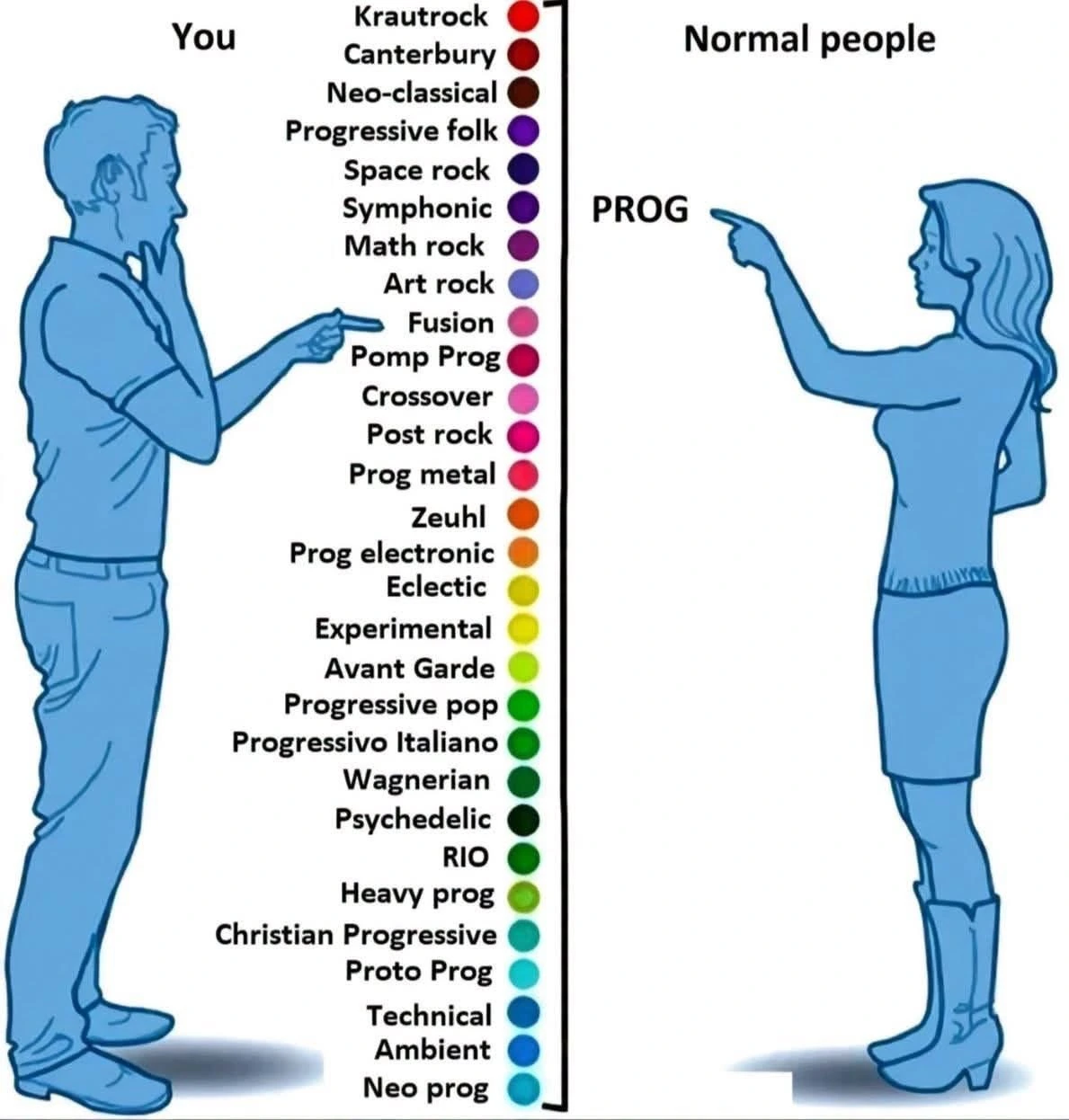
Progressive Rock Subgenres A complete guide to prog rock styles, related genres and listening paths

What Are the Main Progressive Rock Subgenres?

Progressive rock subgenres are different styles of prog rock defined by their musical influences, instrumentation, composition techniques and overall atmosphere. The main styles include symphonic progressive rock, neo-progressive rock, the Canterbury scene, avant-prog, folk prog, progressive metal and space rock.

Progressive rock is a broad musical family rather than a single fixed sound. It combines elements of rock, classical music, jazz, folk, psychedelia, electronic music and metal through ambitious compositions, complex arrangements and adventurous song structures.

Some subgenres focus on orchestral melodies and long-form compositions, while others explore jazz improvisation, experimental sounds, traditional folk influences, heavy guitar riffs or spacious psychedelic atmospheres.

This guide explores the main progressive rock styles, explains what makes each one distinctive and introduces representative bands and albums for listeners who want to discover prog rock by subgenre.

What Is Progressive Rock?

Progressive rock is a broad style of rock music that emphasizes creative composition, musical exploration and ambitious arrangements. It is known for long-form songs, changing time signatures, extended instrumental passages, elaborate structures and lyrical themes that often go beyond conventional rock songwriting.

Often shortened to prog rock or simply prog, progressive rock developed mainly in Britain and the United States during the late 1960s and absorbed influences from classical music, jazz, folk, psychedelia, electronic music and heavy rock.

Progressive rock is better understood as a creative approach than as a strict formula. A band may combine several traditions on the same album, which explains why the boundaries between symphonic prog, art rock, jazz-rock, psychedelic rock, folk prog and progressive metal are often fluid.

Important note: The categories used on this page are practical listening classifications rather than an official universal taxonomy. Many progressive rock bands belong to several subgenres at the same time.

The Main Progressive Rock Subgenres

The main progressive rock subgenres include symphonic prog, neo-prog, Canterbury, avant-prog, Rock in Opposition, progressive folk, jazz-rock fusion, psychedelic prog, space rock, progressive metal, heavy prog, crossover prog and melodic prog. These styles share a spirit of musical exploration but differ in their influences, instrumentation, arrangements and overall atmosphere.

This overview is part of our progressive rock guide. Each section below highlights the characteristic sounds and musical features that can help listeners discover the style that suits them best.

Symphonic Progressive Rock

Symphonic progressive rock, also called symphonic prog, combines rock instrumentation with classical-inspired harmony, orchestral textures, recurring themes and dramatic arrangements. Keyboards, Mellotron sounds and multi-part suites are common.

Listen for: grand melodies, thematic development and cinematic arrangements.

Neo-Prog

Neo-progressive rock emerged mainly in the late 1970s and early 1980s as a new generation revisited the atmosphere and storytelling of classic progressive rock. The style combines accessible melodies with expressive guitars, atmospheric keyboards and dramatic song structures.

Listen for: emotional vocals, atmospheric keyboards and melodic guitar solos.

Canterbury Scene

The Canterbury scene blends progressive rock with jazz, playful songwriting and sophisticated harmony. Wind instruments, improvisation, unusual melodic lines and a distinctive British sense of humour are often part of its musical identity.

Listen for: jazz-influenced harmony, fluid ensemble playing and playful vocals.

Avant-Prog

Avant-prog pushes progressive rock towards avant-garde composition. It may use dissonance, abrupt changes, unconventional instrumentation, theatrical delivery and deliberately challenging structures.

Listen for: abstraction, angular rhythms and unpredictable arrangements.

Rock in Opposition

Rock in Opposition, usually abbreviated to RIO, describes an experimental musical movement and artistic network rather than a conventional sound. It is associated with artistic independence, complex writing and resistance to commercial expectations.

Listen for: chamber-rock textures, free improvisation and unusual meters.

Progressive Folk

Progressive folk combines traditional melodies and instruments with ambitious rock arrangements. Depending on the artist, it can sound pastoral, medieval, acoustic, psychedelic or highly orchestral.

Listen for: acoustic guitars, flutes, fiddles and narrative songwriting.

Jazz-Rock Fusion

Jazz-rock fusion brings improvisation, syncopation, sophisticated harmony and jazz musicianship into a rock setting. Some recordings are guitar-driven, while others focus on keyboards, electric piano, brass or saxophone.

Listen for: solos, odd meters, electric jazz timbres and ensemble interplay.

Psychedelic Progressive Rock

Psychedelic progressive rock develops the exploratory side of late-1960s rock. It often combines extended instrumental passages, unusual effects, surreal lyrics and experimental studio production.

Listen for: sonic effects, dreamlike textures and extended musical journeys.

Space Rock

Space rock focuses on repetition, drones, electronic textures and expansive atmospheres. It frequently overlaps with psychedelic progressive rock and progressive electronic music.

Listen for: cosmic soundscapes, hypnotic rhythms and floating keyboards.

Progressive Metal

Progressive metal combines the heaviness and precision of metal with the complex structures, changing rhythms and experimental ambition of progressive rock. It may include shifting meters, polyrhythms and contrasting clean and heavy passages.

Listen for: heavy riffs, technical playing and dramatic dynamic contrasts.

Heavy Prog

Heavy prog is a darker, harder-edged branch of progressive rock. It retains long-form arrangements while placing greater emphasis on distorted guitars, powerful organ, heavy riffs and forceful vocals.

Listen for: hard-rock energy, organ-led passages and weighty guitar work.

Crossover Prog

Crossover prog sits between progressive rock and accessible forms of rock or pop. It may use shorter songs and strong choruses while retaining unusual arrangements, progressive detail or concept-album ambition.

Listen for: memorable hooks, polished production and progressive touches.

Italian Progressive Rock

Italian progressive rock, also known as Rock Progressivo Italiano, developed its own identity through dramatic vocals, classical influences, melodic keyboards and expressive arrangements.

Listen for: lyrical melodies, symphonic keyboards and theatrical contrasts.

Progressive Electronic Music

Progressive electronic music shares prog's interest in structure, atmosphere and technological exploration. Synthesizers, sequencers and extended instrumental development often replace traditional rock instrumentation.

Listen for: synthesizer textures, sequenced rhythms and evolving soundscapes.

Melodic Progressive Rock

Melodic progressive rock places memorable themes, emotional vocals and expressive arrangements at the centre of the music. It can overlap with symphonic prog, neo-prog and crossover prog.

Listen for: strong melodies, emotional arrangements and accessible song structures.
Related progressive rock styles are musical movements that share elements with prog rock but are not always considered official progressive rock subgenres. They may overlap with progressive rock through experimentation, complex arrangements, extended compositions, unusual rhythms or a strong focus on album-oriented music.

The boundaries between these styles are often fluid. Exploring them can help listeners understand the wider musical ecosystem surrounding progressive rock and discover related forms of experimental, atmospheric and technically ambitious music.

Related styles and their connection with progressive rock
Related Style Connection With Progressive Rock
Art Rock Art rock is a broad category focused on artistic experimentation, studio craft and album-oriented writing. It overlaps considerably with progressive rock, although not every art rock artist uses complex progressive structures.
Krautrock Krautrock refers to a diverse German movement that explored experimental rock, electronic music, repetition, improvisation and motorik rhythms. Some of its atmospheric and electronic developments influenced progressive music.
Zeuhl Zeuhl is an intense and rhythmically complex style that combines progressive rock, jazz, choral writing, dramatic arrangements and, in some cases, invented languages.
Post-Rock Post-rock often uses rock instrumentation for texture, repetition, atmosphere and gradual development rather than traditional choruses. It can overlap with progressive rock through its long-form and exploratory approach.
Math Rock Math rock is known for intricate rhythms, irregular meters, tightly organised guitar parts and technically precise performances. It can overlap with avant-prog and progressive metal.
Proto-Prog Proto-prog is a retrospective term for late-1960s artists who anticipated progressive rock before the genre had fully taken shape. These artists helped introduce longer compositions, studio experimentation and more ambitious arrangements.
Important distinction: A related style is not automatically a progressive rock subgenre. These labels often describe overlapping influences, musical movements or listening connections rather than fixed and universally accepted categories.

Which Progressive Rock Style Should You Explore?

The best progressive rock style to explore depends on the musical features you enjoy most. Listeners who prefer orchestral melodies may enjoy symphonic prog, while those who prefer jazz, heavy riffs, atmospheric keyboards or experimental structures can explore other branches of the progressive rock family.

Use the guide below to find a suitable starting point. These recommendations are not strict rules, because many progressive rock bands combine several styles on the same album.

Progressive rock styles matched with musical preferences
If You Enjoy Try Exploring Typical Characteristics
Orchestral melodies and long suites Symphonic prog Classical influence, Mellotron, recurring themes and elaborate arrangements.
Jazz and instrumental interplay Canterbury or jazz-rock fusion Improvisation, complex harmony, unusual meters and wind instruments.
Atmospheric guitars and keyboards Neo-prog or space rock Expansive textures, emotional dynamics, atmospheric keyboards and melodic solos.
Unpredictable and challenging music Avant-prog or Rock in Opposition Dissonance, abrupt changes, unconventional instrumentation and experimental structures.
Traditional instruments and storytelling Progressive folk Acoustic instruments, narrative lyrics, folk melodies and pastoral or orchestral arrangements.
Heavy riffs and technical playing Progressive metal or heavy prog Distortion, polyrhythms, powerful riffs, technical precision and dramatic contrasts.
Strong choruses with progressive detail Crossover prog or melodic prog Accessible songwriting, memorable hooks, polished production and complex musical touches.
How to use this table: Start with the musical characteristic that attracts you most, then explore neighbouring styles. Progressive rock has flexible boundaries, so one band or album may belong to several categories at the same time.

How Do You Find the Right Progressive Rock Style?

You can find the right progressive rock style by starting with the musical features you enjoy most, such as orchestral melodies, jazz improvisation, atmospheric keyboards, traditional instruments, heavy riffs or experimental structures. Your preferred sound can then guide you towards the progressive rock subgenre that best matches your taste.

If you enjoy cinematic scale, classical influences and long compositions, start with symphonic prog . If you prefer groove, improvisation and sophisticated harmony, explore Canterbury or jazz-rock fusion. Listeners looking for intensity and technical playing may prefer heavy prog or progressive metal .

Listeners who value spacious textures and atmospheric sounds may enjoy space rock, neo-prog or progressive electronic music. Those who prefer acoustic instruments, traditional melodies and storytelling can begin with progressive folk or Italian progressive rock.

These categories should not be treated as strict rules. A single band can move from folk-influenced acoustic passages to jazz, symphonic keyboards and metal riffs within the same album. This constant movement between styles is one of the defining pleasures of progressive music.

Good starting point: Choose one musical characteristic that immediately attracts you, explore the related subgenre and then follow neighbouring styles. The wider progressive rock guide can help you continue your discovery.

How to Discover Progressive Rock Bands and Albums

The best way to discover progressive rock bands is to start with a subgenre, musical characteristic or type of album that matches your interests. You can then explore artists, essential albums and related progressive rock scenes through increasingly specific listening paths.

Listeners who enjoy orchestral arrangements and long compositions can begin with symphonic progressive rock bands. Those who prefer emotional melodies and atmospheric keyboards may find neo-prog more accessible, while fans of heavy riffs and technical playing can explore progressive metal or heavy prog.

Progressive rock discovery paths by listener interest
If You Want to Discover Start With What to Explore Next
Progressive rock bands by style The main progressive rock subgenres Symphonic prog, neo-prog, Canterbury, progressive folk, avant-prog and progressive metal.
Symphonic progressive rock Classical influences and long-form compositions Orchestral arrangements, Mellotron, recurring themes and concept albums.
Neo-progressive rock Atmospheric keyboards and emotional melodies Expressive guitar, dramatic vocals, melodic solos and accessible progressive structures.
French progressive rock The French progressive rock scene French bands, distinctive lyrical traditions, classical influences and regional progressive music.
Progressive rock albums A complete listening path Studio albums, concept albums, live recordings and essential works from different progressive rock eras.
Contemporary progressive rock music Current bands and independent artists New recordings, modern production, experimental arrangements and evolving progressive styles.

You can continue your exploration through the Quetzal music resources or return to the complete progressive rock guide for a broader introduction to the genre.

Listening advice: Do not feel obliged to follow a fixed order. Progressive rock is a wide musical world, and the best discoveries often happen when a band leads you from one subgenre to another.

Frequently Asked Questions About Progressive Rock Subgenres

Progressive rock subgenres differ mainly through their musical influences, instrumentation, composition techniques and overall atmosphere. The answers below explain the most common questions about prog rock styles and classifications.

What are the main progressive rock subgenres?

The main progressive rock subgenres include symphonic prog, neo-prog, Canterbury, avant-prog, Rock in Opposition, progressive folk, jazz-rock fusion, psychedelic prog, space rock, progressive metal, heavy prog and crossover prog.

What is the difference between progressive rock and progressive metal?

Progressive metal combines complex progressive structures with the heavier riffs, distortion and rhythmic precision of metal. Progressive rock has a broader relationship with classical music, jazz, folk, psychedelia, electronic music and experimental rock.

Is neo-prog the same as classic progressive rock?

No. Neo-prog is a later development that revisits elements of classic progressive rock, including atmospheric keyboards, dramatic storytelling and extended compositions. It has its own production style, melodic approach and generation of artists.

What is the most accessible progressive rock subgenre?

Crossover prog and melodic neo-prog are often accessible starting points because they combine progressive arrangements with memorable melodies and strong song structures. Symphonic prog is also a good choice for listeners who enjoy cinematic and orchestral music.

How many progressive rock subgenres are there?

There is no definitive number of progressive rock subgenres. Prog rock is a flexible musical umbrella, and its boundaries continue to change as artists combine rock with metal, electronic music, folk, jazz, psychedelia and post-rock.

What is the difference between prog rock and progressive rock?

There is no musical difference. Progressive rock is the full name, while prog rock and prog are common shorter forms used by listeners, musicians and music publications.

Still exploring? Continue with the complete progressive rock guide or discover more progressive rock music .

Explore More Progressive Rock

Continue exploring the progressive rock universe, discover the French progressive rock scene and learn more about Quetzal's music .

Explore the Progressive Rock Guide