

Symphonic progressive rock is a major style within progressive rock, combining the energy of rock music with strong influences from classical music. It is characterised by long-form compositions, rich keyboard textures, dynamic arrangements, changing time signatures and a strong emphasis on atmosphere, storytelling and musical development rather than conventional song structures.
Emerging in the late 1960s and becoming especially prominent during the 1970s, symphonic progressive rock introduced a more expansive approach to rock music. Instead of relying mainly on simple verse-chorus formats, musicians developed ambitious works shaped by orchestral thinking, thematic development and a wider range of musical influences.
Today, the genre continues to evolve through both established artists and contemporary bands that preserve its spirit while exploring modern production techniques and new musical ideas.
For a curated selection of landmark recordings, explore essential symphonic progressive rock albums featuring elaborate arrangements, keyboards and classical influences, or learn about influential symphonic progressive rock bands such as Yes, Genesis and Emerson, Lake & Palmer.
The roots of symphonic progressive rock can be traced to the late 1960s, when musicians began expanding the artistic possibilities of rock music. Inspired by classical composers, jazz improvisation and experimental music, progressive artists moved beyond traditional pop conventions in favour of longer compositions, conceptual albums and more elaborate arrangements.
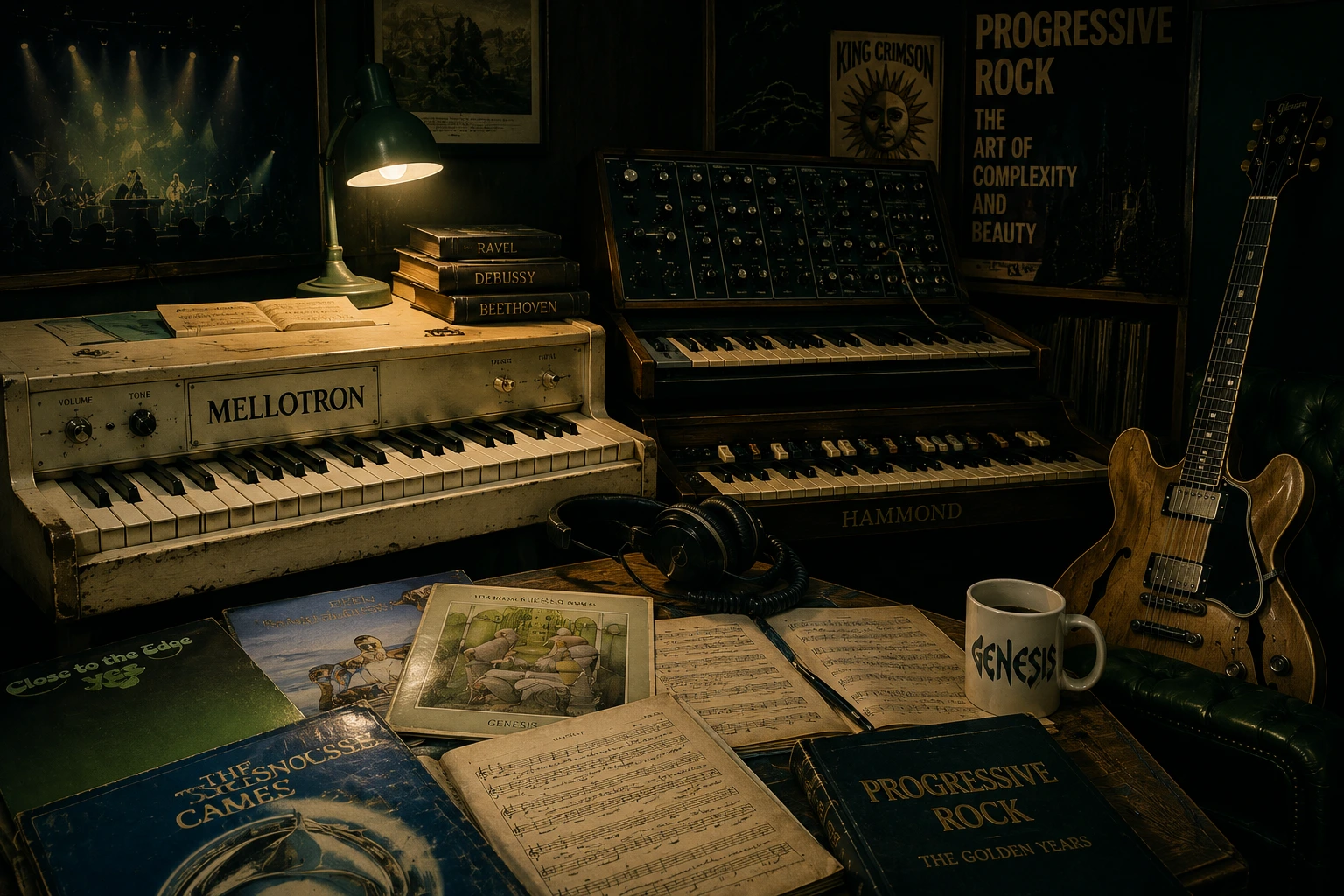
During the 1970s, the genre gained wide recognition through pioneering bands that combined technical musicianship with memorable melodies and orchestral ambition. The Mellotron and Progressive Rock sound became closely associated with the symphonic progressive rock sound, alongside the Hammond organ, Moog synthesizer and grand piano.
These innovations helped establish a musical language that continues to influence progressive rock musicians around the world today.
The history of symphonic progressive rock spans more than five decades of musical development. From the late 1960s, when artists began introducing classical influences into rock music, to today's independent progressive bands, the genre has continued to evolve while preserving its interest in complex compositions, rich arrangements and atmospheric depth.
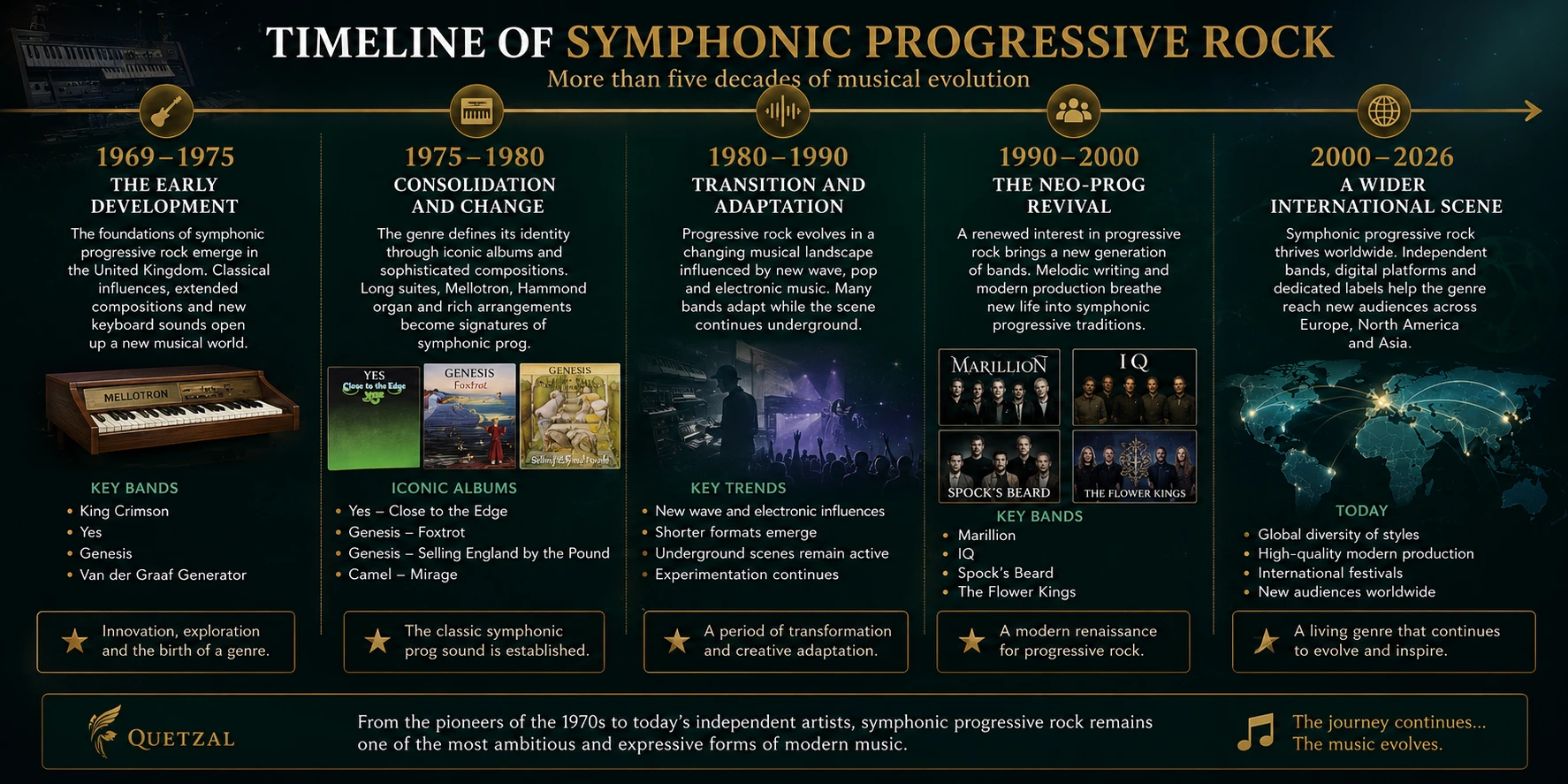
The foundations of symphonic progressive rock emerged in the United Kingdom at the end of the 1960s. Bands such as King Crimson, Yes, Genesis and Van der Graaf Generator helped expand the possibilities of rock music through classical references, extended compositions and the Mellotron in Progressive Rock, alongside ambitious conceptual works.
Although every band has its own identity, several musical characteristics define the symphonic progressive rock genre.
| Characteristic | Description |
|---|---|
| Long compositions | Many pieces exceed ten minutes and unfold through several distinct musical movements. |
| Classical influence | Orchestral harmony, counterpoint and symphonic development strongly influence the music. |
| Keyboard-driven sound | Mellotron, Hammond organ, piano and synthesizers create rich, cinematic textures. |
| Complex arrangements | Frequent tempo changes, odd time signatures and evolving musical structures replace conventional songwriting. |
| Melodic storytelling | Music often develops like a narrative, gradually introducing themes, contrasts and emotional climaxes. |
| Virtuosic musicianship | Each instrument contributes to intricate arrangements while remaining part of a coherent musical whole. |
These characteristics explain why symphonic progressive rock remains one of the most respected forms of progressive music among musicians and dedicated listeners alike.
More than fifty years after its emergence, symphonic progressive rock continues to inspire musicians across the world. Its combination of technical excellence, emotional depth and artistic freedom offers an alternative to conventional rock formats while remaining accessible through memorable melodies and immersive atmospheres.
Modern recording technology has enabled a new generation of progressive rock bands to revisit the symphonic tradition with exceptional production quality, preserving the genre's essence while introducing contemporary influences and fresh creative perspectives.
From Europe and North America to South America and Asia, symphonic progressive rock remains one of the most vibrant and internationally recognised branches of progressive rock.
Symphonic progressive rock has been shaped by several generations of musicians, from the pioneering artists of the 1970s to contemporary bands that continue to expand the genre. Although each group has developed its own musical identity, they all share a commitment to ambitious composition, rich arrangements and artistic exploration.
| Band | Contribution to Symphonic Progressive Rock |
|---|---|
| Genesis | One of the defining bands of the genre, combining theatrical storytelling, memorable melodies and sophisticated compositions. |
| Yes | Renowned for virtuosic musicianship, complex arrangements and symphonic keyboard textures. |
| Camel | Celebrated for lyrical guitar work, melodic instrumental passages and atmospheric compositions. |
| Renaissance | Integrated orchestral influences and classical piano into progressive rock with exceptional elegance. |
| The Flower Kings | Revived classic symphonic progressive rock during the 1990s while developing an unmistakably modern sound. |
| IQ | A leading force in contemporary symphonic and neo-progressive rock, recognised for emotional songwriting and expansive arrangements. |
| Big Big Train | Blends progressive rock with British folk influences, rich orchestration and cinematic storytelling. |
Several albums are regularly cited among the defining works of symphonic progressive rock for their ambition, melodic richness and lasting influence. The records below include some of the highest-rated titles in Album of the Year's user ranking for the genre and remain key listening for anyone exploring symphonic prog [web:11].
| Album | Why It Matters |
|---|---|
| Close to the Edge | Widely regarded as one of the genre's most iconic symphonic achievements, combining virtuosity, scale and compositional depth. |
| Selling England by the Pound | A landmark of melodic writing, English atmosphere and progressive storytelling. |
| Foxtrot | A major Genesis statement that helped define the dramatic and expansive side of symphonic prog. |
| Scheherazade and Other Stories | An elegant and highly orchestral interpretation of progressive rock with strong classical influence. |
| Mirage | One of Camel's essential recordings, admired for its balance of melody, atmosphere and instrumental sophistication. |
Symphonic progressive rock is far more than a nostalgic revival. The genre continues to evolve through artists who preserve its sense of scale, melody and musical ambition while bringing their own contemporary identity to it.
Modern symphonic progressive rock often blends classic elements such as atmospheric keyboards, long-form composition and dynamic development with clearer production, broader influences and a more current sonic approach.
This continuing evolution allows the genre to remain relevant not only for long-time progressive rock listeners, but also for new audiences drawn to immersive, expressive and carefully crafted music.
France has played a distinctive role in the history of progressive rock by developing its own musical identity alongside the better-known British tradition. French progressive rock has long embraced symphonic arrangements, melodic sophistication, experimentation and a strong sense of atmosphere, creating a scene with a character all its own.
While some French artists became known for highly adventurous and experimental directions, others explored a more melodic and symphonic approach rooted in emotion, structure and expressive composition.
This diversity remains one of the defining strengths of French progressive rock, allowing it to range from dramatic and theatrical works to refined symphonic pieces shaped by both tradition and innovation.
Discover more about this rich musical heritage in our dedicated guide to French Progressive Rock.
Quetzal offers a contemporary interpretation of symphonic progressive rock shaped by melodic writing, expressive atmospheres and carefully developed arrangements. Founded in France in 2013, the band draws on the great traditions of progressive music while affirming a musical identity of its own.
The debut album released through Musea Parallèle reflects many of the qualities associated with modern progressive rock, including evolving composition, emotional depth and a strong sense of musical continuity.
Rather than reproducing the past, Quetzal approaches symphonic progressive rock as a living language, rooted in heritage yet open to a contemporary sensibility and a personal artistic voice.
Explore Quetzal's official website, discover the band's music and official discography, or learn more about its place within the French progressive rock scene.
Symphonic progressive rock continues to attract listeners because it places a strong emphasis on artistic ambition, atmosphere and musical development. Fans often value albums that reward repeated listening, where arrangements, textures and thematic details reveal new depth over time.
Rather than relying only on immediacy, symphonic progressive rock often invites listeners into immersive musical journeys shaped by dynamic contrasts, evolving structures and carefully developed motifs.
This approach helps explain why many classic albums remain deeply admired and why the genre continues to resonate with listeners drawn to expansive and emotionally detailed music.
Symphonic progressive rock is closely associated with musical ambition, sonic exploration and a constant search for expressive depth. From the early use of Mellotron and orchestral keyboards to more contemporary production techniques, the genre has continually expanded its sound while preserving its emotional and atmospheric character.
The interplay between electric guitars, expressive vocals, keyboards, acoustic textures and complex rhythmic movement allows composers to move naturally between intimacy, tension and grandeur.
This balance between compositional sophistication and emotional resonance remains one of the defining strengths of symphonic progressive rock.
Being labelled a symphonic progressive rock band involves much more than using keyboards or writing long songs. The genre is defined by a coherent artistic vision in which composition, arrangement and atmosphere work together to create an immersive musical experience.
| Musical Element | Importance |
|---|---|
| Strong melodies | Memorable themes remain central even within complex arrangements. |
| Atmosphere | Keyboard textures and orchestral writing help create immersive soundscapes. |
| Narrative structure | Compositions often develop through contrasting sections rather than relying on simple verse-chorus repetition. |
| Instrumental interaction | The music often depends on close interplay between keyboards, guitars, rhythm section and melodic lines. |
| Dynamic development | Contrasts in intensity, texture and pacing give the music a strong sense of movement. |
| Emotional expression | Technical sophistication is most effective when it supports atmosphere, melody and emotional depth. |
Quetzal belongs to the new generation of symphonic progressive rock bands combining classic influences with a contemporary artistic identity. Inspired by the great traditions of melodic and symphonic progressive rock, the French band develops original compositions where expressive vocals, atmospheric keyboards, melodic guitars and evolving arrangements create immersive musical landscapes.
The band's debut album demonstrates how modern symphonic progressive rock can respect the heritage of the genre while offering a distinctive musical personality built around emotion, melody and progressive composition.
Whether you are discovering progressive rock for the first time or exploring new contemporary artists, Quetzal offers an authentic interpretation of symphonic progressive rock rooted in originality rather than imitation.
Learn more about the band's members, explore the official discography, discover its musical universe or browse our guide to Progressive Rock.
Continue exploring the progressive rock universe through our dedicated guides covering the history of the genre, the French progressive rock scene and Quetzal's musical world.
Understanding symphonic progressive rock requires exploring the musical vocabulary that defines the genre. This glossary introduces the main concepts, instruments and movements associated with progressive music.
Mellotron is a keyboard instrument famous for its orchestral and choir-like sounds, widely used by progressive rock pioneers such as King Crimson and Genesis.
A complete album built around a central story, theme or musical idea, where songs are connected lyrically or compositionally.
A long-form composition made of several interconnected sections, often combining different melodies, rhythms and atmospheres.
The rhythmic structure that defines how beats are organized in a musical piece. Progressive rock frequently uses unusual time signatures such as 7/8 or 5/4.
An electric organ that became one of the signature keyboard sounds of progressive rock, especially during the 1970s.
A modern progressive rock movement that appeared during the 1980s and 1990s, combining classic progressive influences with contemporary production.
A British progressive movement known for its combination of jazz influences, experimentation and psychedelic elements.
A unique French progressive rock movement created by Magma, combining repetitive rhythms, jazz influences, classical structures and a distinctive musical language.
A style of progressive rock characterized by orchestral arrangements, classical influences and extensive keyboard textures.
A progressive style where synthesizers, Mellotron and organs play a central role in creating complex atmospheres.
A long musical piece that develops multiple themes and sections rather than following traditional song structures.
The simultaneous use of different rhythmic patterns, creating complex and evolving musical textures.
A section focused primarily on musical development rather than vocals, often used for improvisation or thematic exploration.
Prog Metal is a heavier evolution of progressive music combining complex structures, technical playing and metal instrumentation.
A musical approach blending progressive rock with jazz, classical music or other genres.
Symphonic progressive rock is a subgenre of progressive rock that combines the energy of rock music with the richness of classical music. It is characterised by long compositions, orchestral keyboards, changing time signatures, melodic development and immersive musical storytelling.
Typical characteristics include extended compositions, complex arrangements, Mellotron and synthesizer textures, dynamic contrasts, sophisticated harmonies, virtuosic musicianship and compositions that evolve like musical journeys rather than conventional pop songs.
Many listeners consider Genesis, Yes, Camel, Renaissance, The Flower Kings, IQ and Big Big Train among the most influential symphonic progressive rock bands. Each has contributed to the evolution of the genre through distinctive compositions and innovative musical approaches.
Progressive rock is a broad musical genre encompassing many different styles. Symphonic progressive rock is one of its principal subgenres, distinguished by strong classical influences, orchestral arrangements, melodic development and large-scale compositions.
Yes. Although it remains a specialist genre, symphonic progressive rock enjoys a loyal international audience. Modern bands continue to release acclaimed albums while festivals, streaming platforms and specialist media help introduce the genre to new listeners.
The genre typically features electric guitar, bass, drums, piano, Hammond organ, Mellotron, synthesizers and expressive vocals. Modern productions may also incorporate orchestral instruments and advanced digital sound design.
Classic albums frequently recommended include Close to the Edge, Selling England by the Pound, The Snow Goose, Scheherazade and Other Stories and Stardust We Are, all recognised for their lasting influence on progressive rock.
Symphonic progressive rock emerged during the late 1960s and 1970s with strong classical influences. Neo-progressive rock appeared mainly during the 1980s, generally favouring shorter compositions, modern production and a stronger emphasis on melody while preserving progressive rock traditions.
Yes. France has produced many internationally respected progressive rock artists and continues to contribute to the genre through independent bands, specialised labels and musicians exploring both classic symphonic influences and modern progressive music.
Yes. Quetzal is generally associated with symphonic progressive rock thanks to its melodic compositions, expressive vocals, atmospheric keyboards and evolving arrangements. The band develops its own contemporary interpretation of the genre while remaining rooted in the progressive rock tradition.
Symphonic progressive rock appeals to listeners who enjoy ambitious songwriting, cinematic atmospheres, musical storytelling, expressive performances and albums that reveal new details with every listen.
Its combination of artistic freedom, technical excellence and emotional depth has inspired generations of musicians. The genre continues to evolve while preserving the creativity and ambition that made progressive rock one of the most innovative forms of modern music.