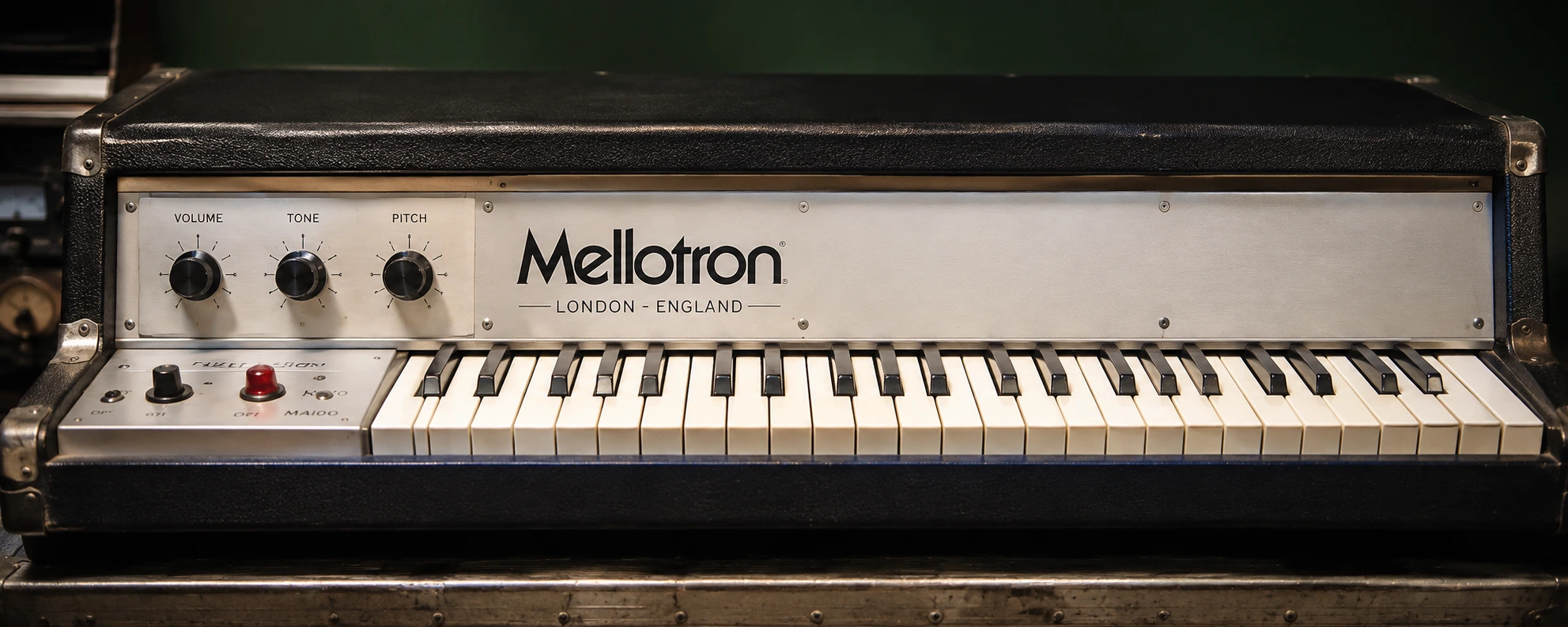

Mellotron and keyboards in progressive rock

Progressive rock keyboards Mellotron, Hammond organ, Moog, piano and synthesizers: the orchestral heart of prog

The orchestral heart of prog

A whole world
behind the keys.

In progressive rock, keyboards do more than support harmony. They expand the band into an orchestra, a sound laboratory and a source of atmosphere, contrast and melodic invention.

From the tape-based strings of the Mellotron to the expressive power of the Moog, the warm foundation of the Hammond organ and the clarity of piano, keyboard instruments shape the identity of classic and modern prog.

This guide explores the instruments, sounds and musical roles that make keyboards central to progressive rock composition. Keyboards interact with guitar, bass, drums and vocals to create the layered identity of progressive music. This interplay is essential to progressive song structure and becomes a powerful tool when composing progressive rock. For the complete panorama of the genre's sonic palette, return to the progressive rock instruments guide.

6+ Key voices
Textures
1970s Classic foundation

Mellotron Tape, orchestra and atmosphere

The defining sound

An orchestra at the fingertips.

The Mellotron is one of the most recognisable sounds in progressive rock. By playing recorded tapes through a keyboard, it brought strings, choirs and flutes into the rock band format.

Its slight imperfections, unstable pitch and ghostly texture are part of its charm. The Mellotron does not simply imitate an orchestra: it creates a distinct, dreamlike and instantly identifiable world.

Discover the Mellotron

The keyboard palette

Six voices.
Infinite horizons.

Each keyboard instrument brings a different response to the needs of progressive rock: orchestral texture, harmonic foundation, virtuosic solo, acoustic contrast, electronic atmosphere or experimental sound design.

01 Tape keyboard

Mellotron

Recorded strings, choirs and flutes bring a fragile, symphonic and cinematic dimension to progressive rock.

02 Electric organ

Hammond organ

Warm, powerful and percussive, the Hammond organ supports harmony while delivering dramatic riffs and soaring solos.

03 Analog synthesis

Moog

The Moog gives prog its bold analog leads, bass tones, oscillating textures and unmistakable electronic energy.

04 Acoustic foundation

Piano

Acoustic piano introduces clarity, melodic precision, classical influence and intimate contrast within complex arrangements.

05 Electric colour

Electric piano

Rhodes and similar electric pianos offer a warmer, more fluid texture that connects progressive rock with jazz and fusion.

06 Modern synthesis

Synthesizers

Analog, digital and software synthesizers extend prog into electronic space, evolving pads, sequences and new sonic worlds.

Musical function

What do keyboards do in progressive rock?

Keyboards are not restricted to accompaniment. They can establish a composition’s harmonic identity, introduce a new world between sections, lead an instrumental climax or transform a simple band arrangement into a wide sonic landscape.

Texture

Pads, strings, choirs and atmospheric layers give arrangements scale, depth and an orchestral dimension.

Harmony

Organ, piano and electric piano establish chords, movement, contrast and harmonic tension across long compositions.

Lead

Moog and synthesizers can take the melodic foreground through expressive solos, themes and instrumental dialogue.

Transition

Keyboard colours connect sections, signal changes of mood and help shape the narrative movement of a progressive suite.

Evolving technology

From tape loops to modern sound design.

Progressive rock has always embraced new keyboard technology without abandoning its classic sounds. Each era expanded the palette available to composers and performers.

1970s

The classic foundation

Mellotron, Hammond, Moog, acoustic piano and electric piano define the orchestral and experimental language of classic prog.

1980s

Digital precision

Digital synthesizers expand the range of sounds, introducing cleaner textures, programmable patches and new electronic colour.

1990s

Progressive revival

Modern prog reconnects with long-form composition while combining classic keyboard heritage and contemporary production.

Today

Hybrid worlds

Vintage hardware, modern workstations, software instruments and sampled orchestras coexist in contemporary progressive rock.

Questions and answers

FAQ: progressive rock keyboards.

Essential answers about Mellotron, Hammond, Moog, piano and synthesizers in progressive rock.

What keyboards are used in progressive rock?

Progressive rock uses Mellotron, Hammond organ, Moog, acoustic piano, electric piano, analog synthesizers, digital keyboards and modern workstations.

What is the most emblematic keyboard in progressive rock?

The Mellotron is often regarded as the most emblematic progressive rock keyboard because its tape-based strings, choirs and flutes created a singular orchestral sound.

Why are keyboards so important in progressive rock?

Keyboards provide orchestral textures, harmonic depth, melodic leads, ambient layers and sonic transitions that help progressive rock move beyond the traditional rock format.

What is the difference between a Mellotron and a synthesizer?

A Mellotron plays recordings stored on tape, whereas a synthesizer generates or shapes electronic sound. Both are central to progressive rock, but they create very different textures and playing experiences.