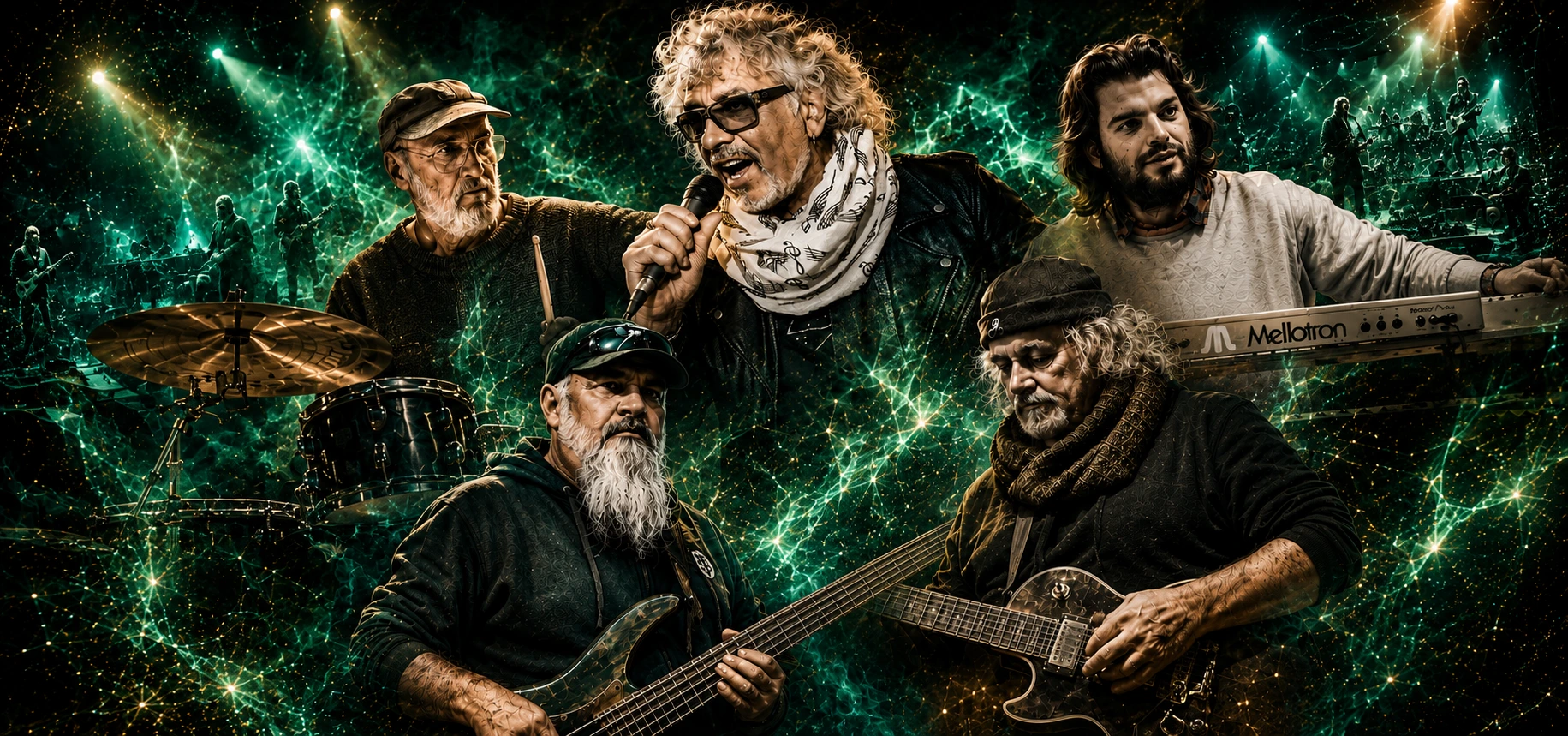

Quetzal live performance and progressive rock guitar

Progressive rock guitar Riffs, arpeggios, solos, textures, sustain and effects

The voice of texture

Six strings.
Endless landscapes.

In progressive rock, guitar is never limited to riffs or solos. It can create rhythm, atmosphere, tension, melody and sonic architecture across the full length of a composition.

A progressive guitarist can move from delicate acoustic arpeggios to saturated riffs, from lyrical sustain to abstract textures and from precise unison figures to spacious ambient passages.

Guitar is part of the core progressive rock instrument palette. Its dialogue with bass, drums and keyboards creates the layered identity of progressive music. This interplay is essential to progressive song structure and becomes a powerful tool when composing progressive rock.

6 Strings and beyond
Sonic colours
1 Musical journey

Guitar Tone, movement and imagination

More than a lead instrument

The sound that can become a world.

Progressive rock guitar can establish a powerful riff, state a melodic theme, paint a distant atmosphere or build tension through a single sustained note. Its role changes constantly with the music.

Effects, dynamics and articulation allow guitar to move between foreground and background, between rhythm and melody, and between raw energy and delicate detail.

Explore all instruments

The guitar vocabulary

Beyond
the solo.

Progressive guitar language is built on contrast. Technical detail and emotional expression coexist with ambient space, rhythmic precision, layered sound and long-form musical development.

01 Rhythmic identity

Riffs

Progressive riffs can be heavy, angular, hypnotic or asymmetric, often interacting with bass and drums through precise rhythmic figures.

02 Harmonic movement

Arpeggios

Arpeggios create motion without density. They can support a vocal, open a quiet section or establish the harmony of an extended suite.

03 Expression

Solos

Progressive solos can be lyrical, modal, technical or improvised, developing themes rather than simply displaying virtuosity.

04 Atmosphere

Textures

Volume swells, sustained notes, feedback, harmonics and layered lines can turn guitar into a broad cinematic soundscape.

05 Sound design

Effects

Delay, reverb, chorus, phaser, flanger, compression and distortion extend the guitar’s voice far beyond a traditional rock tone.

06 Ensemble dialogue

Unison and contrast

Guitar can lock into unison with bass and keyboards, or create contrast against them through separate rhythms and melodic layers.

Musical function

What does guitar bring to a progressive rock band?

Guitar shapes the identity of a progressive arrangement through rhythm, harmony, atmosphere and lead expression. It can define the opening gesture of a composition or become one colour among many.

Drive

Riffs, chords and rhythmic figures create energy and forward motion, especially when linked closely to bass and drums.

Colour

Effects, tone shaping and articulation allow guitar to add brightness, darkness, space, tension and emotional nuance.

Theme

Guitar can introduce memorable melodic motifs, answer vocals and develop instrumental themes through a composition.

Contrast

Acoustic and electric tones, silence and distortion, density and space create the dramatic contrasts central to prog.

Evolving sound

From classic textures to modern progressive power.

Progressive rock guitar has evolved through changing technology, styles and production methods while retaining its central role as a source of texture, melody and instrumental expression.

1970s

Exploration

Classic prog guitar combines acoustic detail, melodic lead work, experimental effects and a strong dialogue with keyboards.

1980s

New textures

Rack effects, chorus, delay and more polished production expand the atmospheric and layered possibilities of guitar.

1990s

Technical fusion

Progressive metal and modern prog bring heavier riffs, precise unisons, extended-range guitars and more aggressive tones.

Today

Hybrid identity

Contemporary players mix vintage warmth, digital flexibility, ambient sound design and powerful rhythmic precision.

Questions and answers

FAQ: progressive rock guitar.

Essential answers about riffs, solos, textures, effects and the role of guitar in progressive rock.

What makes progressive rock guitar different?

Progressive rock guitar combines riffs, arpeggios, extended harmony, melodic solos, ambient textures, unusual meters and effects to support long and evolving compositions.

What effects are used in progressive rock guitar?

Progressive rock guitar often uses delay, reverb, modulation, phaser, chorus, flanger, compression, overdrive, distortion and volume-based effects to create textures and atmosphere.

What is the role of guitar in progressive rock?

Guitar can provide riffs, chordal movement, arpeggios, melodic themes, solos, ambient textures and instrumental dialogue with bass, drums and keyboards.

Why are guitar textures important in progressive rock?

Guitar textures create atmosphere, contrast and sonic depth. Effects and playing techniques can transform guitar from a rhythm instrument into a wide and immersive soundscape.